First Trip to India: What to Know Before You Go
Not a list of places to see — a practical starting point for everything else a first visit actually involves.
By Dhruv Poonia, Digital & Marketing Manager, Colourful Indian Holidays · Published 30 September 2026
Already know you want this trip? Skip ahead and tell us your dates.
Most guides to a first trip to India are lists of monuments. This one isn't. If you want to know what to see, our 20 Best Tourist Places in India covers that ground well. What that kind of list doesn't cover is everything around it: how long to plan for, what to sort out beforehand, what the trip actually feels like day to day, and where a first-timer should sensibly start. That's what this guide is for.
First Trip at a Glance
- Ideal length: 10 to 12 days.
- Where to start: the Golden Triangle — Delhi, Agra, Jaipur.
- Sort in advance: visa, health check-in, first few nights' hotels.
- Easiest setup: a private driver and guide, at least for the first few days.
- Best season: October to March.
How Many Days Should You Plan For?
Ten to twelve days is the comfortable range for a first visit — enough time for the classic Delhi-Agra-Jaipur circuit plus one region beyond it, without every day becoming a travel day. A week works if you keep to the Golden Triangle alone. Fewer than five or six days rarely does India justice; the distances between places worth seeing are genuinely large, and a rushed first trip tends to leave people wanting to come back rather than feeling satisfied. Our Golden Triangle itinerary guide and Rajasthan itinerary guide both set out real day-by-day plans at different lengths if you want to see how the days actually break down.
What to Sort Out Before You Fly
- Your visa. Most nationalities need an e-Visa arranged in advance; our e-Visa guide covers the types, fees and the newer e-Arrival Card by nationality.
- Health preparation. A conversation with your own doctor or a travel clinic several weeks ahead is worth having; our health and vaccination guide sets out what's generally discussed.
- Money. A mix of cards and cash, and knowing what to expect at ATMs and with UPI; our currency and payments guide covers this in detail.
- Your first few nights. Book at least the first few nights and your airport pickup in advance, so you land into a plan rather than a search after a long flight.
What the Trip Actually Feels Like
India is more intense on the ground than most first-time visitors expect, and it's worth hearing that plainly rather than only reading about the monuments. Cities are loud, crowded and visually dense. Touts, unofficial guides and shopkeepers steering you toward a commission-paying stop are a real, constant presence in tourist areas — not dangerous, but tiring, and worth expecting rather than being caught off guard by. A calm, brief "no thank you" handles almost all of it. The heaviest version of this hits hardest in the first day or two, before you've found your rhythm, which is exactly why a pre-arranged pickup and a light first day matter more here than on most first trips abroad.
Getting Around: Decide This Early
How you move between cities shapes the whole trip, and it's worth deciding before you arrive rather than improvising. A private car and driver is the easiest option for a first visit — no station transfers, no negotiating fares, and the ability to stop along the way. Trains suit travellers who want to do more independently. Our guide to getting around India compares flights, trains and road transport properly.
Private Tour, Independent Travel, or Somewhere Between
A fully private tour — driver, guide and hotels arranged for you — removes most of the friction from a first trip and is the easier route while you're still finding your footing. Fully independent travel is cheaper and more flexible, and suits confident travellers with time to research. Many first-timers land somewhere in between: a private arrangement for the first few days and the main circuit, with more independence added once they've got a feel for the country. If you're travelling alone specifically, our solo travel guide goes deeper into that decision.
What a Guide and Driver Actually Do For You
If this is your first time using a private guide and driver, it is worth knowing what that arrangement actually covers, since it is not the same as a group tour. Your driver handles every transfer between cities and sights, deals directly with parking and traffic, and is available on your schedule rather than a fixed timetable. A local guide at each stop explains the history and context of what you are seeing and can answer the kind of questions a plaque never covers. Together, they also act as a practical buffer against the touts and unofficial guides mentioned above, since a group with its own guide is a far less appealing target. This is the single biggest reason a private arrangement tends to feel so much easier for a first visit than travelling entirely independently from day one.
This is exactly how our private tours work. See our tour packages
Money: A Realistic First-Trip Budget Shape
Rather than a single figure, it helps to know where the money in a first trip actually goes. Private transport and a guide form a fixed daily cost regardless of how many people are travelling together, which is why a shared trip is considerably cheaper per person than a solo one. Hotels vary enormously by tier, and a first-time visitor often finds mid-range heritage or well-reviewed hotels give the best sense of a place without stretching the budget the way a five-star stay would. Meals, entry fees and shopping are the genuinely variable part of the trip, and easy to keep modest if that matters to you. Our currency and payments guide covers the practical side of carrying and spending money once you are there.
When Is the Best Time to Go?
October to March is the comfortable season across most of the country — cooler temperatures, clearer skies, and the window most first-time visitors choose. Our best-time-to-visit guide breaks this down by month if your dates are flexible.
What to Pack
Comfortable, well broken-in walking shoes matter more than almost anything else on this list, since every sightseeing day involves genuine time on your feet and you will need to slip them off at religious sites and inside some monuments. Light, modest clothing works across most of the country and is expected at temples and mosques regardless of the weather. A warm layer is worth packing even in the supposedly warm winter months, since desert evenings in Rajasthan and mornings anywhere at altitude can be genuinely cold. Sun protection, a reusable water bottle, and a photocopy of your passport and visa rounded out in a small daypack cover most of what a first trip actually needs.
Food: More Reassuring Than People Expect
Food worry is one of the more overstated concerns first-time visitors bring with them. Hotel restaurants and any place recommended by your guide or driver are a safe starting point, and most travellers find their stomach settles into the food within the first few days regardless. Bottled or filtered water is worth sticking to throughout, and it is sensible to pace yourself with street food specifically in the first day or two rather than diving in immediately, but it is not something to build the whole trip around avoiding. Vegetarian food, in particular, is a genuine strength of Indian cooking rather than a limited fallback option, and it is available everywhere.
Common First-Trip Mistakes
- Trying to see too many cities in too few days, rather than fewer places at a real pace.
- Booking a full sightseeing day immediately after a long-haul flight.
- Arriving without a pre-arranged airport pickup and negotiating a taxi while jet-lagged.
- Skipping the visa or health preparation until the last minute.
- Assuming a single Golden Triangle trip needs to cover everything — it doesn't; most repeat visitors come back for Rajasthan, Kerala or the Himalaya on a second trip.
Where to Actually Start
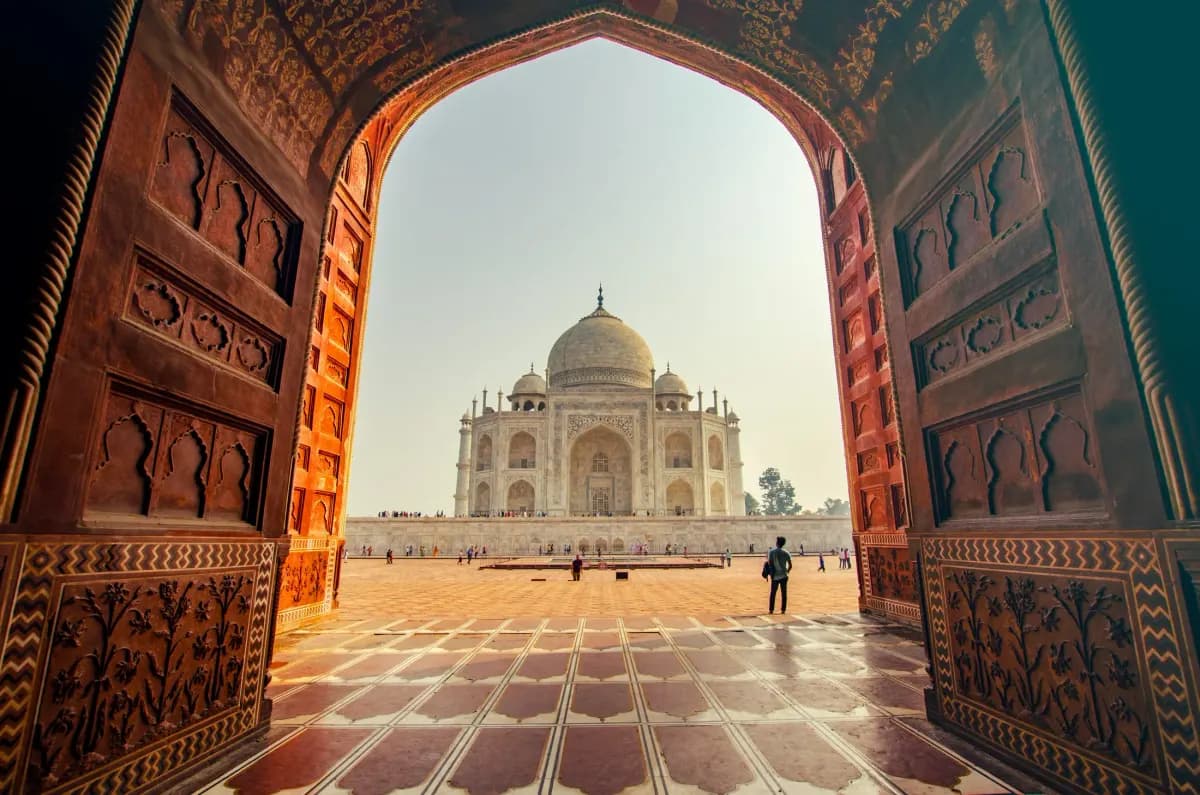
For nearly every first-time visitor, the answer is the classic circuit: Delhi, Agra and the Taj Mahal, and Jaipur. It's well-travelled for a reason — reliable infrastructure, manageable distances, and a genuine cross-section of Mughal and Rajput India in one trip. Our Taj Mahal visiting guide is worth reading regardless of how the rest of your itinerary shapes up, since getting that one visit right — the right day, the right time of day — matters more than almost any other single decision on a first trip.
This is exactly the route we recommend most first-timers start with. View the Classic Golden Triangle Tour
Bringing It All Together
A good first trip to India comes down to a handful of decisions made well in advance: enough days to avoid rushing, the visa and health basics sorted early, a plan for getting around decided before you land, and realistic expectations about the pace of the place. Get those right and the rest of the trip tends to take care of itself. Tell us your dates and how much you'd like arranged, and we'll build the itinerary around them.
Dhruv Poonia is the Digital & Marketing Manager for Colourful Indian Holidays, working alongside a family travel business that has arranged tours across India, Nepal and Bhutan since 2007. He also oversees the company's sister sites, Rajasthan Travel Agency and Palace on Wheels Tour.
He writes and maintains the destination guides, route information and travel advice published on this site, drawing on his day-to-day work planning itineraries for international travellers to keep every page accurate and current.
Start Your Journey
Ready to Plan Your First Trip?
Tell Us Your Dates.
Tell us how many days you have and what you'd like arranged, and we'll draft a real itinerary within 24 hours.