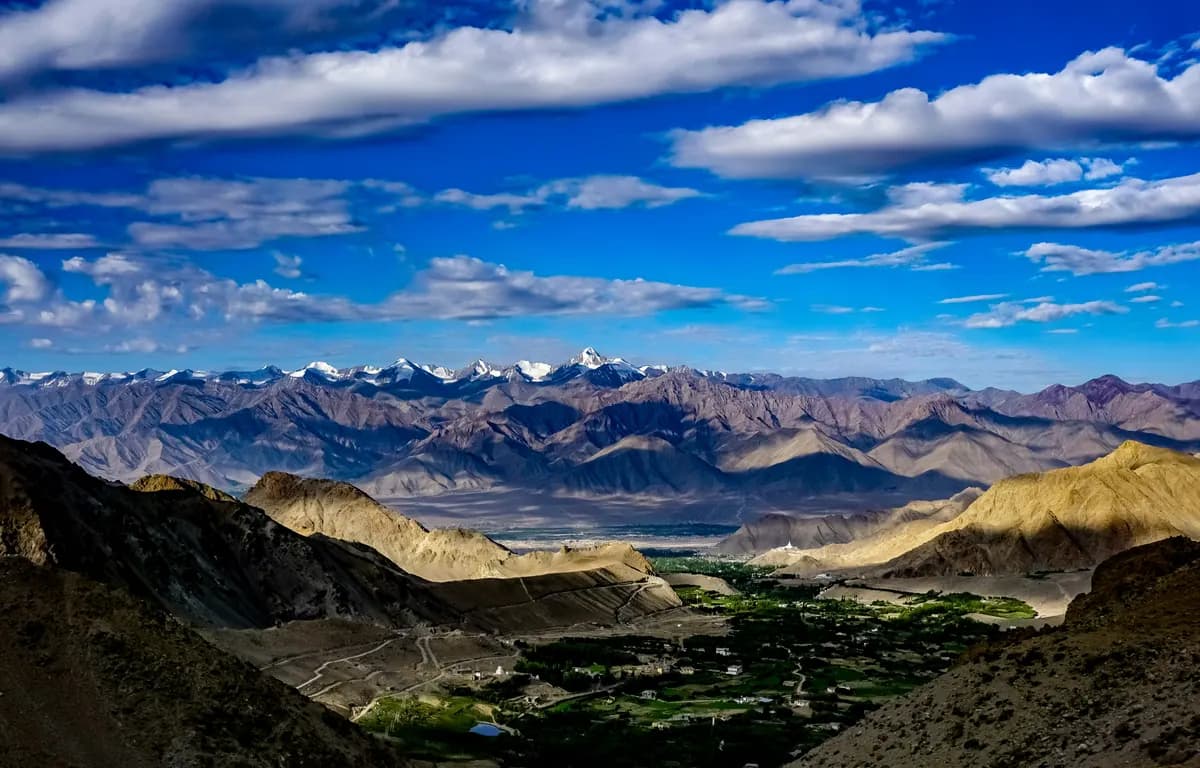
Trekking Tours: The Markha Valley, Ladakh
A genuine high-altitude trek along the ancient Silk Route through Hemis National Park — two mountain passes, remote Ladakhi villages, and some of the starkest, most dramatic scenery in the Indian Himalaya.
Duration
9 Days / 8 Nights
Group Size
Private, any size
Starting From
Price on Request
Best Season
Jun – Sep
Trekking Tours Itinerary
The Markha Valley Trek is widely considered one of Ladakh's classic routes — a multi-day walk along the Markha River through Hemis National Park, crossing two high passes and passing through villages that have changed little in generations. This isn't a gentle walk added onto a sightseeing trip; it's a genuine trek requiring real fitness, multiple river crossings, and several nights camping or in village homestays above 4,000 metres. In exchange, it offers a side of Ladakh that a standard Leh-and-monasteries itinerary simply doesn't reach — remote valleys, herding communities, and mountain scenery that few travellers to India ever see.
Day 1 — Arrive in Leh
Private transfer from Leh airport to your hotel, at roughly 3,500 metres. Leh's altitude alone is enough to affect most travellers arriving directly from sea level, so today and tomorrow are kept deliberately unstructured — rest, hydrate, and avoid strenuous activity while your body begins to adjust.
Day 2 — Acclimatisation in Leh
A second day at altitude before the trek begins, with only gentle activity — a short walk through Leh's old town and market, or a visit to a nearby monastery at a similar elevation. Skipping proper acclimatisation is the single most common reason trekkers struggle later in the route, so this day isn't optional padding.
Day 3 — Drive to Zingchen, Trek to Yurutse
A short drive from Leh to Zingchen, then the trek itself begins — a relatively gentle 4 to 5 hour walk to Yurutse, at around 4,160 metres, entering Hemis National Park along the way. Snow leopards live in this park, though a sighting is genuinely rare; more commonly seen are blue sheep and, occasionally, golden eagles overhead.
Day 4 — Cross Ganda La, Descend to Skiu
The trek's first high pass — Ganda La, at approximately 4,830 metres — crossed in the morning while the ground is still firm, followed by a long descent into the village of Skiu, where the trail meets the Markha River for the first time. A demanding day, but the views south to the Zanskar range from the pass are, by most accounts, worth the effort.
Day 5 — Trek to Markha Village
Following the Markha River upstream through a landscape that shifts from wooded lower valley to increasingly stark, high-altitude terrain, arriving at Markha village itself — the trek's namesake and one of its larger settlements, with visible remnants of the old Silk Route trade that once passed through here.
Day 6 — Trek to Hankar
A shorter, less demanding day continuing along the valley to Hankar, passing mani walls carved with Buddhist prayers and small farming settlements irrigated from glacial meltwater — a landscape that has supported the same subsistence farming for generations.
Day 7 — Trek to Nimaling
A climb through a narrowing valley to Nimaling, a high alpine meadow at around 4,700 metres used by local herders through the summer months. This is the trek's highest camp before tomorrow's pass, and the 360-degree views of snow-capped peaks from here are among the route's most photographed.
Day 8 — Cross Kongmaru La, Drive Back to Leh
The trek's highest point — Kongmaru La, at approximately 5,150 to 5,275 metres depending on the exact route taken — crossed in the morning for views of the Kang Yatse massif and the wider Zanskar and Karakoram ranges, before a long descent to Chogdo or Shang Sumdo, where a vehicle meets the trail for the drive back to Leh.
Day 9 — Departure
A private transfer to Leh airport for your onward or return journey, nine days and two high mountain passes behind you.
Inclusions & Exclusions
What's Included
- 2 nights in a hotel in Leh (before the trek)
- 6 nights of trekking accommodation (camping and/or village homestays, depending on the stage)
- All meals during the trekking days
- A qualified trekking guide and support crew throughout
- Private vehicle for all road transfers before and after the trek
- Necessary camping equipment (tents, sleeping arrangements) for camped nights
Not Included
- International and domestic flights
- Meals in Leh (before and after the trek)
- Personal trekking gear (boots, warm clothing, sleeping bag liner)
- Personal expenses, tips, and travel insurance
- Any permit fees specific to Hemis National Park, confirmed at time of booking
Why Choose Trekking Tours With Us
Two High Passes
Ganda La (~4,830m) and Kongmaru La (~5,150-5,275m), the trek's two major crossings, each with genuinely different views over the Zanskar and Karakoram ranges.
The Ancient Silk Route
The Markha Valley once carried real Silk Route trade, and the villages along it still show that history in their layout and culture.
Hemis National Park
Home to snow leopards, blue sheep and golden eagles, with genuinely remote, undeveloped terrain most Ladakh visitors never reach.
June–September is Best
Unlike almost everywhere else on this site, October through March is the wrong season here — Ladakh's high passes are snowbound outside the June-to-September window, when the route is actually accessible. This is the opposite seasonal logic from a typical India trip, worth planning around specifically if you're combining this trek with other travel.
Related Destinations
Helpful Travel Guides
- First Trip to India: What to Know Before You GoHow long to plan for, visas, seasons and what to book first.Read the guide
- India e-Visa Guide 2026Visa types, fees, stay limits and the e-Arrival Card.Read the guide
- Solo Travel in India: A Practical GuideGetting around, common scams and staying comfortable alone.Read the guide
Common Questions About Trekking Tours
Can't find your answer? Our team responds within 2 hours on WhatsApp and within 12 hours by email.
Do I need prior trekking experience for the Markha Valley Trek?
Some is genuinely helpful, since this is graded moderate to difficult — multiple consecutive days of 4 to 7 hours of walking, high altitude, and several river crossings. It's not a beginner's first trek, though reasonably fit travellers without extensive experience do complete it successfully with a properly paced acclimatisation schedule.
Is altitude sickness a serious risk on this trek?
Yes, genuinely — most of the route sits above 4,000 metres, with the highest pass over 5,100 metres. The 2-day Leh acclimatisation built into this itinerary is not optional padding, and we'd strongly recommend discussing this trip with your doctor beforehand if you have any relevant health conditions.
What are the accommodations like during the trek?
A mix of camping and village homestays depending on the stage, genuinely basic compared to a standard hotel — you'll need your own sleeping bag and warm clothing regardless of which nights are camped versus homestayed. This is a real trek, not a glamping experience.
When can I actually do this trek?
June through September, when Ladakh's high passes are clear of snow. Outside this window the route isn't accessible, which is the opposite of the October-to-March season that suits most of the rest of India.
Can this trek be combined with a standard Kashmir & Ladakh sightseeing trip?
Yes — many travellers add this trek onto a Leh-based sightseeing itinerary, given the Leh acclimatisation days already required for both. Tell us if you'd like to combine this with our Kashmir & Ladakh Tours and we'll build a single connected itinerary.
Some is genuinely helpful, since this is graded moderate to difficult — multiple consecutive days of 4 to 7 hours of walking, high altitude, and several river crossings. It's not a beginner's first trek, though reasonably fit travellers without extensive experience do complete it successfully with a properly paced acclimatisation schedule.
Yes, genuinely — most of the route sits above 4,000 metres, with the highest pass over 5,100 metres. The 2-day Leh acclimatisation built into this itinerary is not optional padding, and we'd strongly recommend discussing this trip with your doctor beforehand if you have any relevant health conditions.
A mix of camping and village homestays depending on the stage, genuinely basic compared to a standard hotel — you'll need your own sleeping bag and warm clothing regardless of which nights are camped versus homestayed. This is a real trek, not a glamping experience.
June through September, when Ladakh's high passes are clear of snow. Outside this window the route isn't accessible, which is the opposite of the October-to-March season that suits most of the rest of India.
Yes — many travellers add this trek onto a Leh-based sightseeing itinerary, given the Leh acclimatisation days already required for both. Tell us if you'd like to combine this with our Kashmir & Ladakh Tours and we'll build a single connected itinerary.
Itinerary planned by Dhruv Poonia, Digital & Marketing Manager
Start Your Journey
Your India Journey Awaits.
Let's Plan It Together.
Every journey here is built privately around your dates and preferences — tell us what you have in mind and we'll reply within 24 hours.