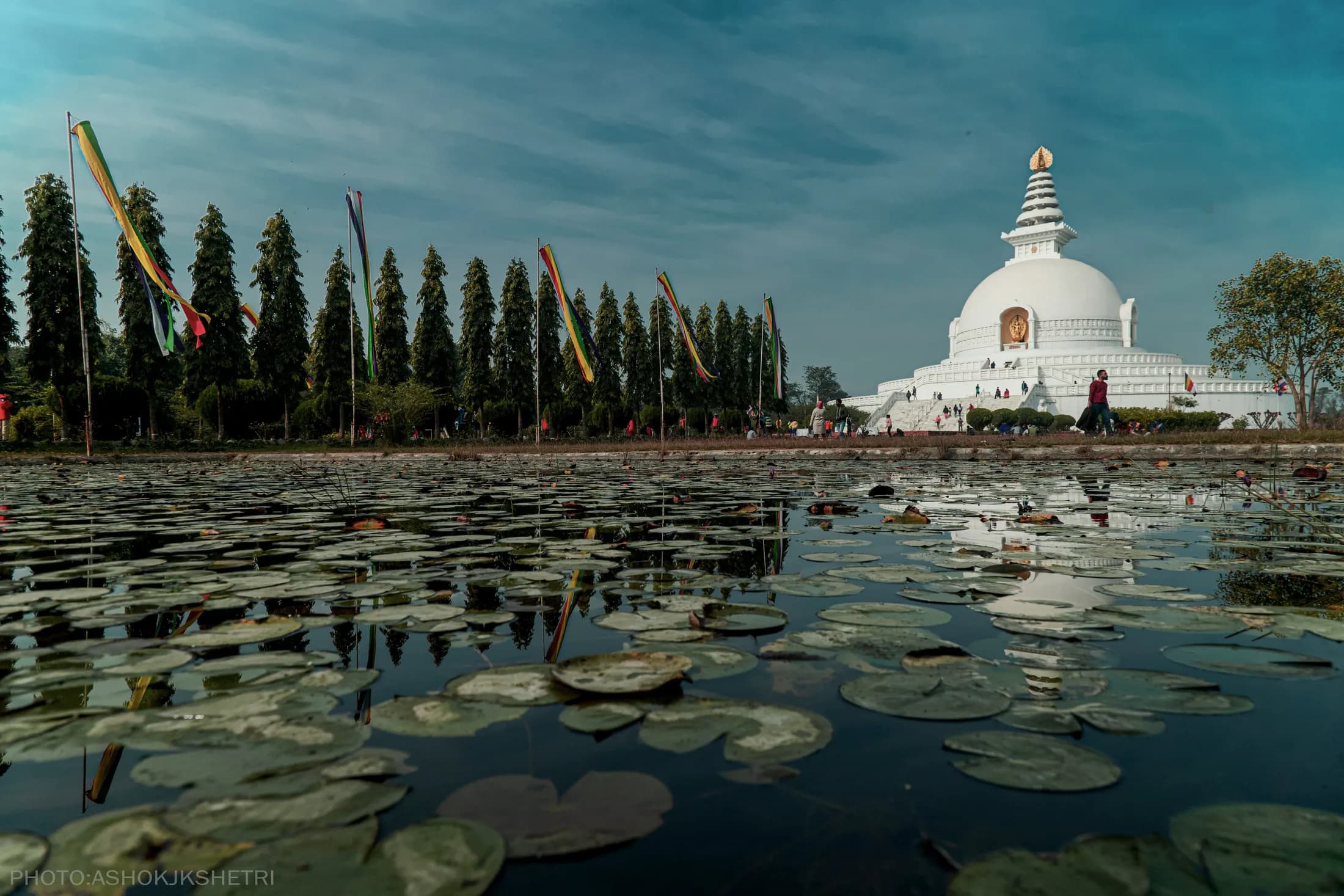
Lumbini — The Birthplace of the Buddha
A UNESCO World Heritage site holding the exact spot of the Buddha's birth, ringed by monasteries built by Buddhist nations from across the world.
Best Season
October–March (Cooler Months)
Ideal Trip Length
1 – 2 Days
Main Gateway
Gautam Buddha Airport (Bhairahawa), or overland via Sunauli
Languages Spoken
Nepali, English
The Birthplace of the Buddha
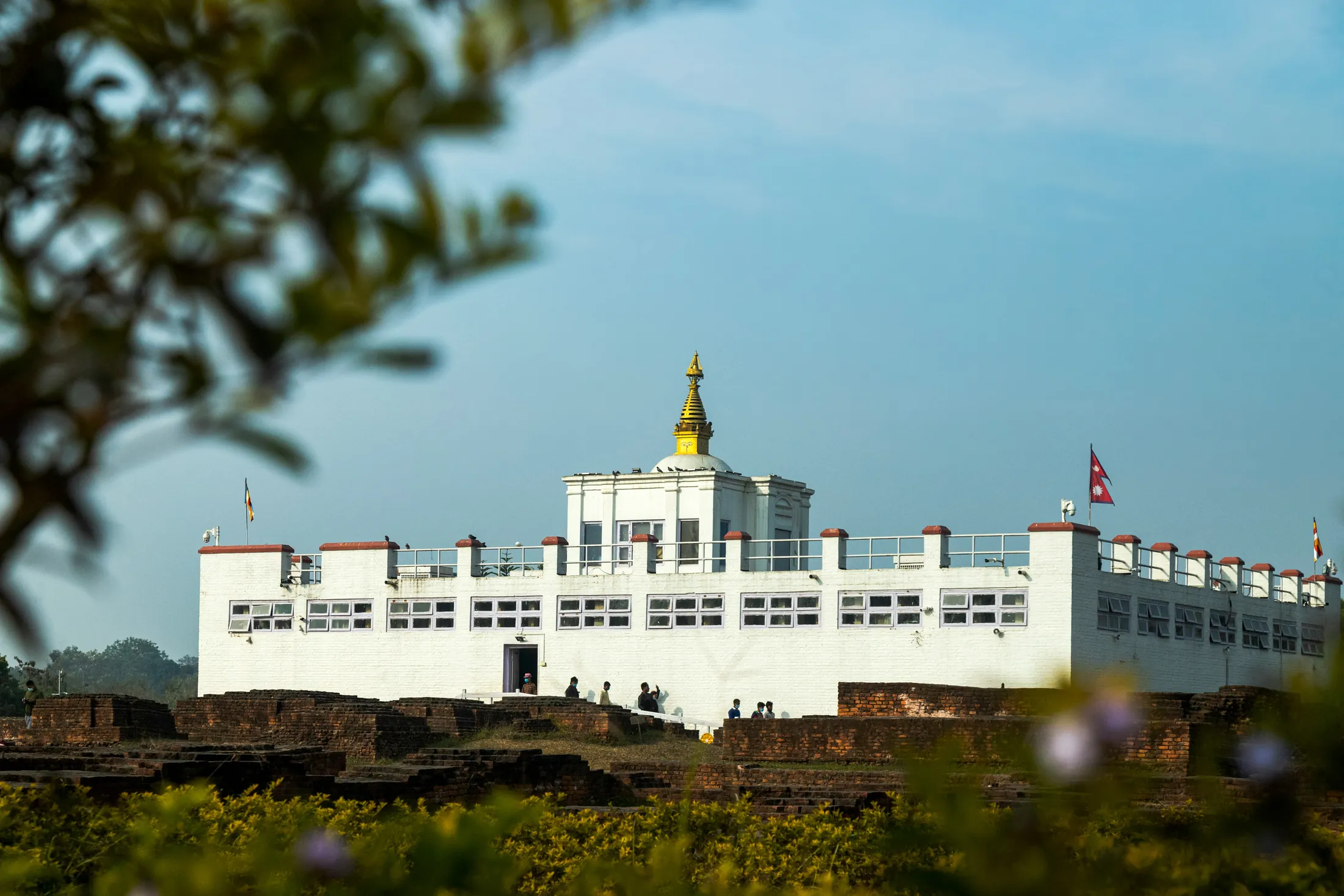
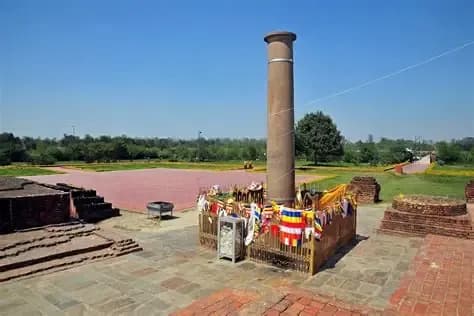
Lumbini holds a claim few other places on Earth can make: this is, by archaeological and historical consensus, the exact site where Siddhartha Gautama — who would become the Buddha — was born, around the 6th century BCE. At the centre of the site stands the Maya Devi Temple, built directly over the marker stone believed to mark the precise spot, alongside the Ashoka Pillar, a sandstone column erected in 249 BCE by the Indian emperor Ashoka whose inscription is the earliest surviving historical confirmation that this is indeed Lumbini. Nearby, the quiet Pushkarini Pond and Sacred Garden mark the spot where tradition holds that Buddha's mother bathed before giving birth.
What makes Lumbini unusual as a heritage site is the Monastic Zone that surrounds the sacred core — a planned complex where Buddhist nations including Myanmar, Thailand, Japan, China, Vietnam and Cambodia have each built a monastery in their own national architectural style, alongside a gleaming white World Peace Pagoda built by Japanese Buddhists. It's possible to walk between strikingly different temple traditions in a single afternoon, something almost no other pilgrimage site in the world allows. Sitting close to the Nepal–India border, Lumbini pairs naturally with Sarnath, Bodh Gaya and Kushinagar on a wider Buddhist heritage circuit, or as a quieter, more contemplative stop on a broader Nepal itinerary.
What to See
Getting There
By Air from Kathmandu
A roughly 30-minute flight connects Kathmandu to Gautam Buddha Airport in nearby Bhairahawa, the fastest way in for travellers based in the capital.
Overland from India
Lumbini sits close to the Nepal–India border, making it a natural stop on a Buddhist circuit connecting Varanasi, Sarnath, Bodh Gaya and Kushinagar via the Sunauli border crossing.
By Road from Kathmandu
An 8 to 9 hour drive from Kathmandu through the Terai lowlands — a long day, so most travellers either fly or combine the drive with a Chitwan stop along the way.
What Makes This Different
One of Buddhism's Four Great Pilgrimage Sites
Lumbini is revered as the birthplace of the Buddha, one of the four most sacred sites in Buddhism alongside Bodh Gaya, Sarnath and Kushinagar in India.
A UNESCO World Heritage Site
The core archaeological zone, including the Maya Devi Temple and Ashoka Pillar, has been recognised by UNESCO for its authenticity and historical significance.
An International Monastery Complex Unlike Anywhere Else
Few sites anywhere let you walk between dozens of monasteries built by different nations in a single afternoon, each reflecting its own country's Buddhist architectural tradition.
A Natural Extension of India's Buddhist Circuit
Lumbini's proximity to the Nepal–India border makes it straightforward to combine with Sarnath, Bodh Gaya and Kushinagar on a single Buddhist heritage itinerary.
A Slower, More Contemplative Pace
Where Kathmandu and Pokhara are built around sightseeing and activity, Lumbini's flat, garden-like site rewards a slower, more reflective visit.
October–March is Best
The cooler months make walking between the sacred site and the Monastic Zone far more comfortable, since Lumbini sits in the Terai lowlands, which get intensely hot and humid from April through the summer monsoon.
Nearby & Related Destinations
Getting Around by Private Car



Common Questions
The questions we hear most from travellers planning a trip to Lumbini.
Can't find your answer? Our team responds within 2 hours on WhatsApp and within 12 hours by email.
How many days should we plan for Lumbini?
1 to 2 days is enough to see the Maya Devi Temple, the Ashoka Pillar and the World Peace Pagoda at an unhurried pace, with time to explore the wider monastic zone.
Can Lumbini be combined with India's Buddhist circuit?
Yes — Lumbini's location near the Sunauli border crossing makes it a natural addition to an itinerary covering Sarnath, Bodh Gaya and Kushinagar in India.
Is Lumbini only for Buddhist pilgrims?
Not at all — the site's history, architecture and the sheer variety of international monasteries make it worthwhile for any traveller interested in history or culture, regardless of religion.
Do we need a separate visa for Nepal?
Yes, Nepal requires its own visa, though most nationalities can get a visa on arrival at Tribhuvan International Airport in Kathmandu or at the Sunauli border — we'll confirm current requirements for your passport when planning your trip.
1 to 2 days is enough to see the Maya Devi Temple, the Ashoka Pillar and the World Peace Pagoda at an unhurried pace, with time to explore the wider monastic zone.
Yes — Lumbini's location near the Sunauli border crossing makes it a natural addition to an itinerary covering Sarnath, Bodh Gaya and Kushinagar in India.
Not at all — the site's history, architecture and the sheer variety of international monasteries make it worthwhile for any traveller interested in history or culture, regardless of religion.
Yes, Nepal requires its own visa, though most nationalities can get a visa on arrival at Tribhuvan International Airport in Kathmandu or at the Sunauli border — we'll confirm current requirements for your passport when planning your trip.
Itinerary planned by Dhruv Poonia, Digital & Marketing Manager
Start Your Journey
Your Journey to Lumbini Awaits.
When Will You Go?
Tell us how many days you have and what you'd like to see — we'll reply with a tailored itinerary and quote, usually within 24 hours.