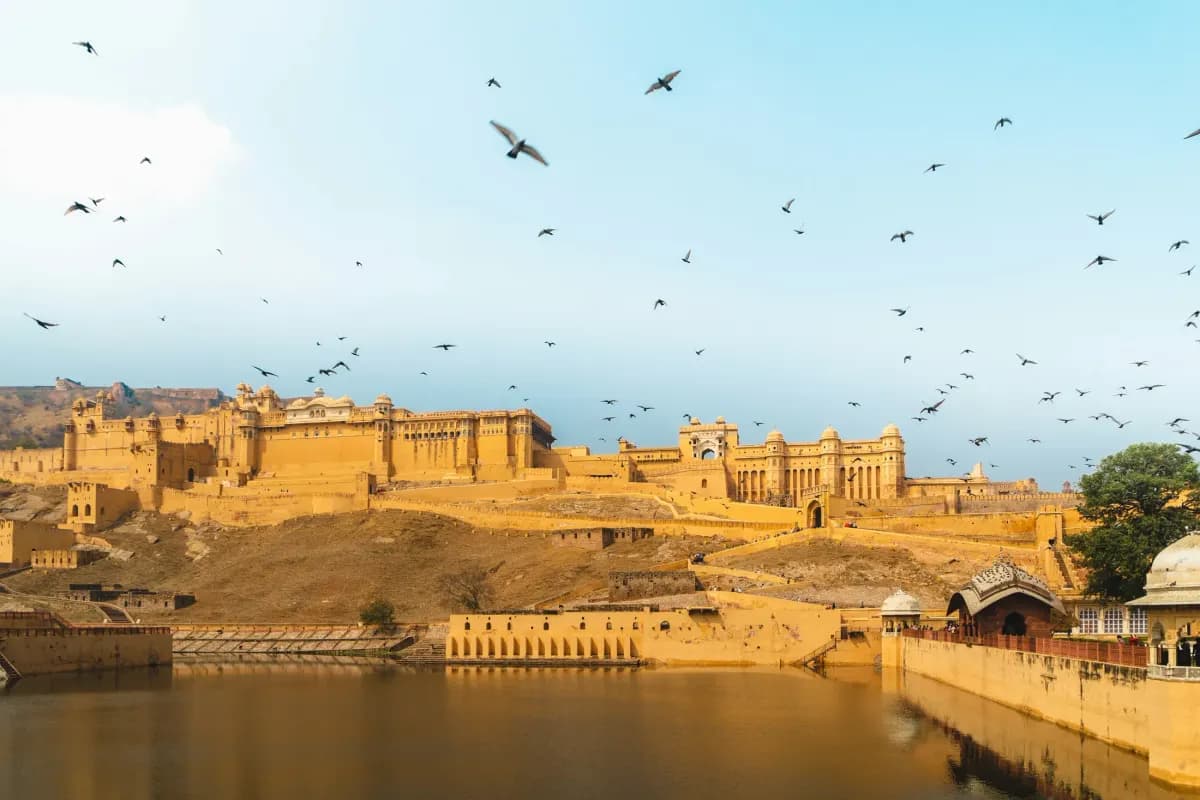
When to Go, Region by Region
India is too large for one single travel season — here's how the best time to visit actually varies by destination.
Why There's No Single Answer
India runs on several climates at once, not one. The country stretches from Ladakh's high-altitude desert in the north to Kerala's tropical coastline in the south — roughly the same north-to-south span as the distance from London to Casablanca — so “the best time to visit India” genuinely depends on which part of it you mean. What follows is the pattern that actually governs most itineraries: a long, comfortable dry season across the north broken by an intense summer and an equally intense monsoon, with several regions running on their own separate calendar entirely.
For Rajasthan, Delhi, Agra and the classic Golden Triangle — the core of most first-time India itineraries — the season runs roughly October through March: dry air, blue skies, and daytime temperatures that stay comfortable for full-day sightseeing. April through June brings serious heat to these same regions, often exceeding 40°C in Rajasthan and Delhi by May, before the monsoon arrives around late June and brings humidity, rain, and a different kind of travel altogether. Meanwhile Leh & Ladakh runs in the opposite direction entirely: its high mountain passes are typically snow-closed from November to April, making June through September — exactly when the rest of North India is at its most difficult — the only real window to visit at all.
Wildlife parks add another layer. Ranthambore, Sariska and Bandhavgarh actually produce some of their best tiger sightings in the punishing heat of April to June, when thinning vegetation and the search for water bring animals into the open, while Kaziranga in Assam closes outright from June to September as the Brahmaputra floods the park. Kerala's backwaters are arguably at their lushest just after the monsoon retreats, from September onward, rather than in the driest months further north. The table below breaks this down month by month; the region guide beneath it does the same city by city and park by park.
What Each Month Actually Looks Like
| Month | Weather | Crowds | Festivals | Best For | Avoid / Watch For |
|---|---|---|---|---|---|
| January | Peak cool season — cold mornings in Rajasthan and Delhi, pleasant midday sun. | Peak season — book hotels well ahead | Makar Sankranti, Jaipur Literature Festival | Rajasthan, Delhi, Agra, the Golden Triangle, tiger safaris | Northern hill stations under snow; early-morning Delhi smog |
| February | Still cool and dry across the north; warming quickly in the south. | Peak season, easing slightly toward month's end | Jaisalmer Desert Festival, Vasant Panchami | Rajasthan, desert festivals, South India, Kerala backwaters | Nothing major — a genuine year-round sweet spot for most of the country |
| March | Warming fast in the plains; still comfortable in the hills and Himalayas. | Moderate, rising briefly around Holi | Holi, Jaipur Elephant Festival | Holi in North India, Himalayan foothills, early hill-station trips | Midday heat starting to build in Rajasthan, Delhi and Agra |
| April | Hot across the plains; hill stations and higher-altitude regions come into their own. | Low in the plains, rising in the hills | Baisakhi, Himachal apple-blossom season | Himachal, Leh & Ladakh (late April), Darjeeling, Sikkim | Rajasthan, Delhi and Agra during peak midday hours |
| May | The hottest month across most of the plains, ahead of the monsoon. | Low in the plains, peak season in hill stations | Buddha Purnima | Himalayan hill stations, Leh & Ladakh, high-altitude trekking | Rajasthan and the Golden Triangle for daytime sightseeing |
| June | Monsoon arrives in the south and east first; still dry and very hot in the north-west. | Low nationally, busy in Ladakh and hill stations | Rath Yatra (usually late June) | Leh & Ladakh (a genuine monsoon-shadow exception), high Himalayan regions | Kerala, Goa and the west coast as the monsoon sets in |
| July | Monsoon in full swing across most of the country. | Low, except Ladakh's short peak season | Continuing Rath Yatra celebrations, regional monsoon festivals | Leh & Ladakh, monsoon greenery in the Western Ghats for travellers who don't mind rain | Most lowland sightseeing itineraries; Kaziranga is closed for flooding |
| August | Peak monsoon in most regions, with a brief lull in parts of the north-west. | Low nationally, Ladakh still busy | Teej, Independence Day (Aug 15), Raksha Bandhan | Leh & Ladakh, monsoon festivals like Teej and Independence Day | Coastal and lowland travel generally |
| September | Monsoon retreating; humidity still high but rainfall easing. | Low, a good month to book ahead for October | Ganesh Chaturthi, Onam (Kerala) | Early-season bookings for October travel; Ganesh Chaturthi celebrations | Still too early for reliable dry-season sightseeing in most regions |
| October | The classic season begins — skies clear, humidity drops, temperatures turn pleasant. | Rising fast toward peak season | Navratri, Dussehra, sometimes Diwali (lunar calendar dependent) | Nearly everywhere: Rajasthan, the Golden Triangle, Kerala, wildlife parks reopening | Early October can still be humid in parts of the east and south |
| November | Comfortable, dry and increasingly popular — the season is now in full swing. | Peak season — book well ahead | Diwali (most years), Pushkar Camel Fair | Rajasthan, the Golden Triangle, the Pushkar Camel Fair, wildlife safaris | Delhi's air quality often worsens noticeably this month |
| December | Cool to cold, especially at night in Rajasthan and the north; a popular holiday month. | Peak season, busiest around Christmas–New Year | Christmas, New Year celebrations nationwide | Rajasthan, the Golden Triangle, South India's coast, Christmas and New Year breaks | Higher hotel rates and busier sights around the Christmas–New Year window |
Rajasthan vs. Kerala vs. Ladakh vs. the Himalayas
These four regions illustrate just how differently “season” plays out across India — two run on the same October–March calendar as the Golden Triangle, and two run on their own timing entirely.
Rajasthan & the Golden Triangle
October through March, no real exceptions.
This is the region most first-time itineraries are built around, and it has the most clear-cut season of any part of the country. Outside October–March, daytime temperatures in Jaipur, Agra and Delhi regularly climb past 40°C from April to June, making full days of fort- and monument-hopping genuinely uncomfortable rather than just warm. November and February are usually the sweet spot within that window — dry and mild without December's coldest nights or Delhi's worst late-autumn smog.
Kerala
September through March — but for different reasons at each end.
Kerala runs almost opposite to the popular imagination of "Indian monsoon = avoid." The backwaters are arguably at their greenest and most dramatic in September and October, just as the monsoon retreats, rather than in the driest winter months. December through February then brings the classic dry, warm, beach-friendly season most visitors expect. Late May through August is the true monsoon and best avoided unless you specifically want to experience it.
Leh & Ladakh
June through September — the exact opposite of the rest of North India.
Ladakh sits in the rain shadow of the Himalayas, so it barely receives the monsoon that shuts down travel elsewhere, and its high mountain passes are typically snow-closed from November through April or May. That leaves a short, specific window — roughly June to September — when Ladakh is not just tolerable but genuinely at its best, precisely while Rajasthan and Delhi are at their most difficult. Plan a Ladakh trip on its own calendar, not the rest of India's.
The Himalayas (Himachal, Darjeeling & Sikkim)
March through June, and again October through November.
Lower and more accessible than Ladakh, Himachal's hill stations, Darjeeling and Sikkim follow a gentler version of the same logic — pleasant spring and early-summer weather from March to June, a wet monsoon through the late summer, then a second, clearer window in autumn before winter cold sets in. Spring brings apple and rhododendron blossoms in Himachal; autumn brings the clearest mountain views of the year.
Best Time to Visit, by Region
Rajasthan
Cool, dry days — the classic season for forts and cities alike.
October – March
Delhi
Comfortable, though November–December can bring heavy smog.
October – March
Agra
Often the hottest Golden Triangle stop April–June.
October – March
Varanasi
Cool mornings for sunrise boat rides on the Ganges.
October – March
Ranthambore, Sariska & Bandhavgarh
April–June heat often brings the best tiger sightings, despite the temperatures.
October – June
Kaziranga
Closed June–September for the Brahmaputra monsoon floods.
November – April
Tamil Nadu & Gujarat Coasts
Cool, dry conditions for coastal sightseeing.
November – February
Maharashtra Coast
Best before the Konkan coast's summer humidity sets in.
October – February
Andaman Islands
Best diving and beach conditions; heavy monsoon rain June–September.
October – May
Himachal & Leh-Ladakh
Ladakh's high passes are typically snow-closed November–April.
April – October
Kerala Backwaters
Post-monsoon lushness through the dry, cooler winter months.
September – March
Nepal (Kathmandu, Pokhara, Everest Region)
The clearest Himalayan views fall either side of winter and the monsoon.
October – December & March – May
Bhutan
Same two windows as Nepal — clearest mountain views, most comfortable trekking.
October – December & March – May
Common Questions
What international travellers ask most often when timing an India trip.
Can't find your answer? Our team responds within 2 hours on WhatsApp and within 12 hours by email.
What is the single best month to visit India?
For most first-time itineraries — Rajasthan, Delhi, Agra and the Golden Triangle — October to March is the reliable window, with November and February often cited as the sweet spot: dry, comfortable temperatures without December's coldest nights or Delhi's worst air quality.
Is there a single 'best time to visit India' for the whole country?
No — India is roughly the size of Western Europe, and its regions run on genuinely different calendars. Rajasthan and Delhi are best October–March, Ladakh is only accessible June–September, and Kerala's backwaters are at their lushest just after the monsoon. The right month depends entirely on where your itinerary goes.
When should we avoid travelling to India?
The core monsoon months (June to September) are the trickiest for a classic North India itinerary — heavy rain, high humidity, and some parks like Kaziranga closed entirely. The exception is Leh & Ladakh, which sits in a rain shadow and is actually best visited in exactly this window.
Does the monsoon affect the whole country at once?
No — it arrives in Kerala first, typically around late May or early June, then moves north and east over the following weeks, and retreats from the north-west last, usually by late September. A region-by-region view matters more than a single national monsoon date.
Should we plan around festivals like Diwali or Holi?
It can be a highlight, but book well ahead — both fall during or near the high season and hotel rates rise accordingly. Exact dates shift each year with the lunar calendar, so we confirm them when we build your itinerary rather than quoting a fixed date here.
For most first-time itineraries — Rajasthan, Delhi, Agra and the Golden Triangle — October to March is the reliable window, with November and February often cited as the sweet spot: dry, comfortable temperatures without December's coldest nights or Delhi's worst air quality.
No — India is roughly the size of Western Europe, and its regions run on genuinely different calendars. Rajasthan and Delhi are best October–March, Ladakh is only accessible June–September, and Kerala's backwaters are at their lushest just after the monsoon. The right month depends entirely on where your itinerary goes.
The core monsoon months (June to September) are the trickiest for a classic North India itinerary — heavy rain, high humidity, and some parks like Kaziranga closed entirely. The exception is Leh & Ladakh, which sits in a rain shadow and is actually best visited in exactly this window.
No — it arrives in Kerala first, typically around late May or early June, then moves north and east over the following weeks, and retreats from the north-west last, usually by late September. A region-by-region view matters more than a single national monsoon date.
It can be a highlight, but book well ahead — both fall during or near the high season and hotel rates rise accordingly. Exact dates shift each year with the lunar calendar, so we confirm them when we build your itinerary rather than quoting a fixed date here.
Start Your Journey
Your India, Nepal & Bhutan Journey Awaits.
Where Will You Begin?
Tell us your travel window and where you'd like to go — we'll build an itinerary around the right season, usually with a reply within 24 hours.