Varanasi — India's Most Sacred City
One of the oldest continuously inhabited cities in the world, and the single most significant pilgrimage destination in India — still lived and practised daily along the Ganges.
Best Season
October – March
Ideal Trip Length
2 – 3 Days
Main Gateway
Varanasi (VNS)
Languages Spoken
English, Hindi
A Living Tradition, Not a Preserved One
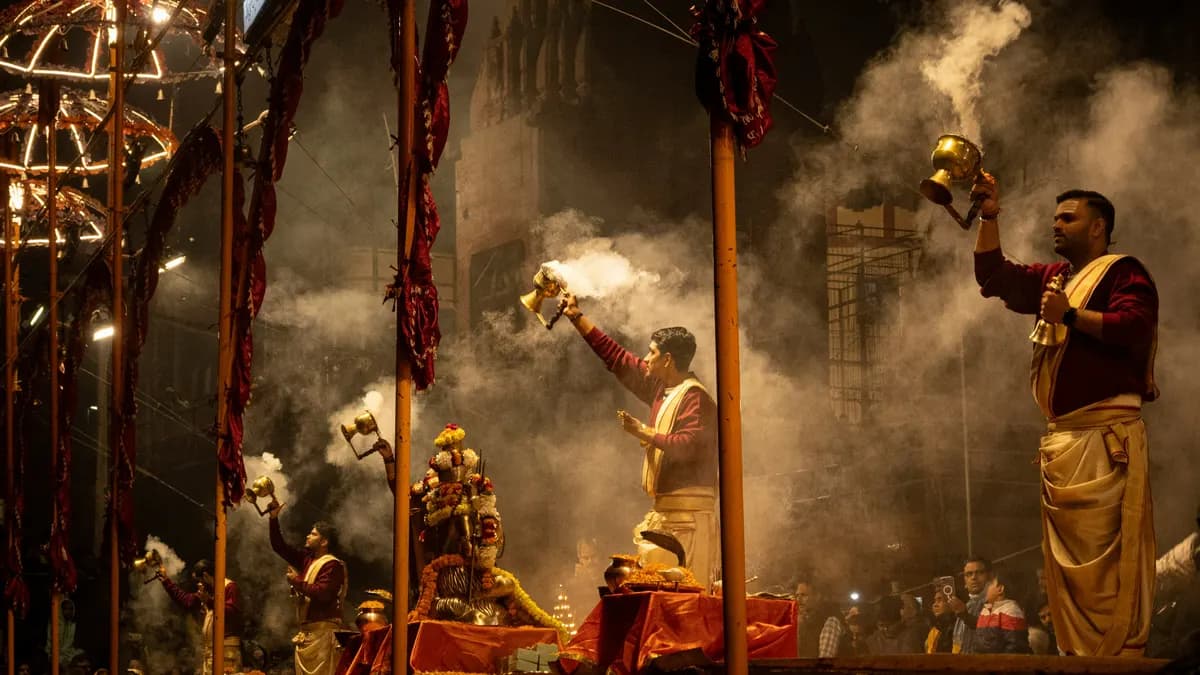
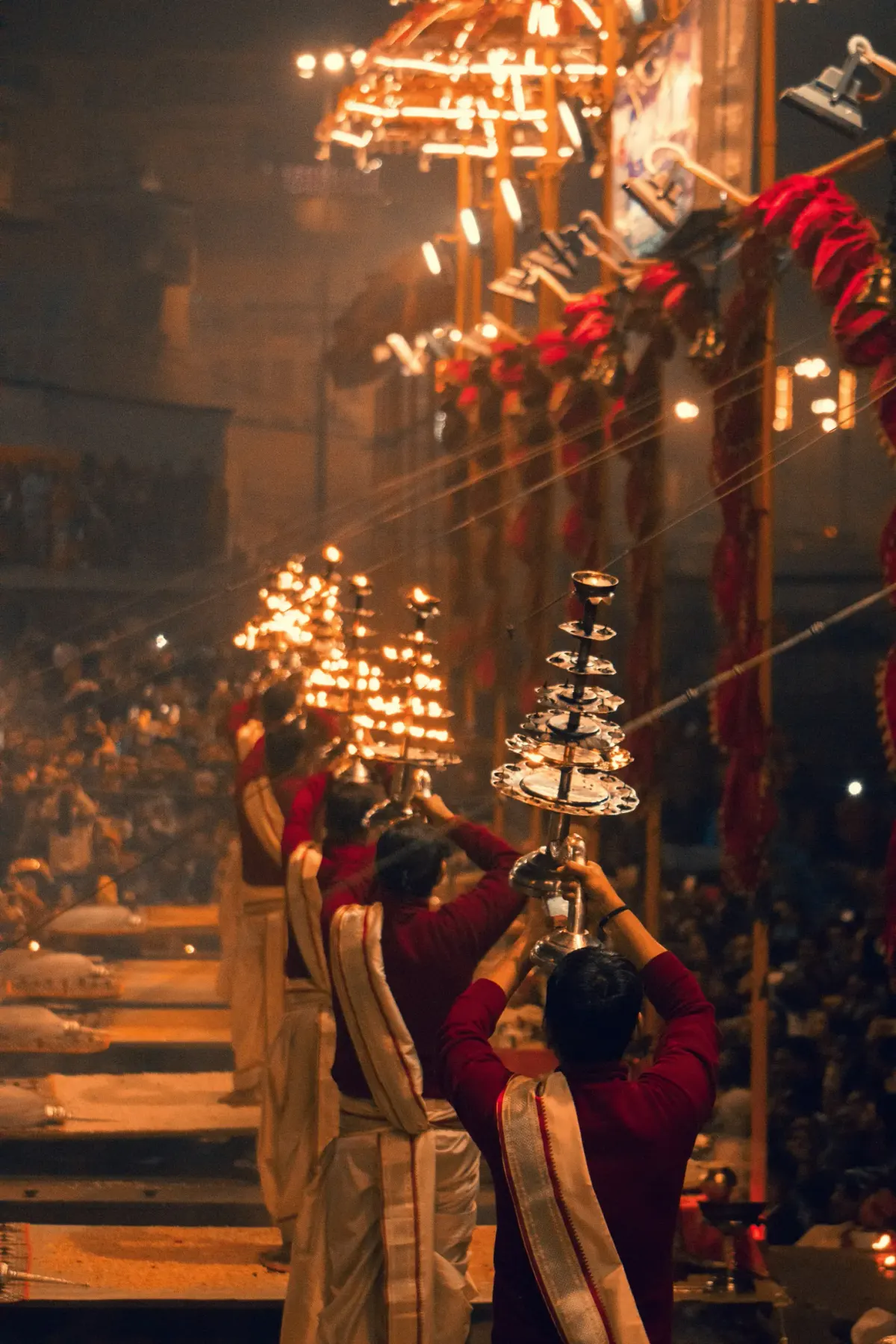
Varanasi isn't a monument you visit — it's a ritual you watch happen in real time. The evening Ganga Aarti at Dashashwamedh Ghat is the same ceremony that has taken place at that spot for generations, and it happens again tonight regardless of who's watching. That's what sets Varanasi apart from almost everywhere else on a typical India itinerary — the city's significance isn't historical, it's current. Among the oldest continuously inhabited cities in the world, built along the western bank of the Ganges, Varanasi has drawn Hindu pilgrims for millennia on the belief that dying here, or having one's ashes scattered in the river, brings moksha — release from the cycle of rebirth.
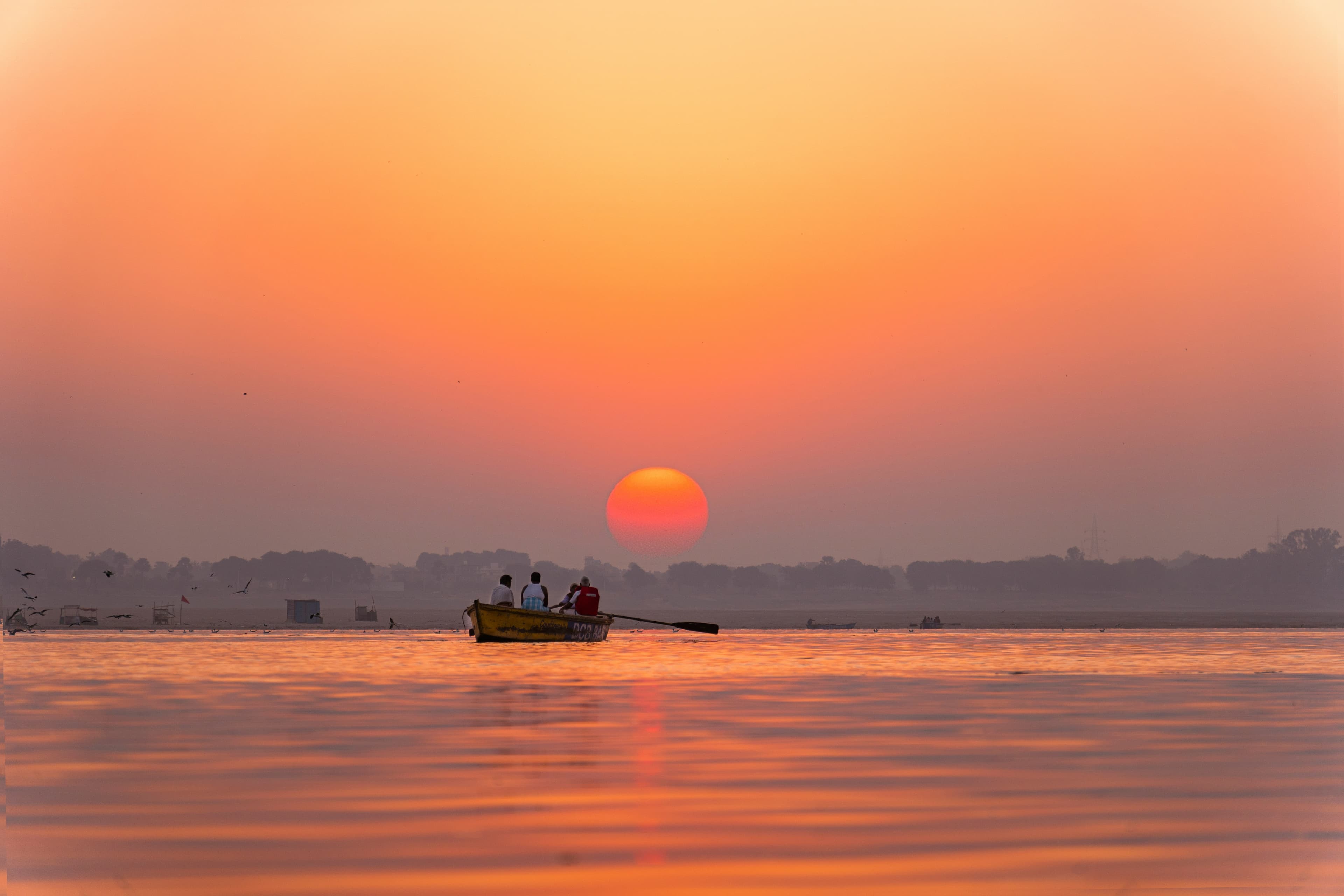
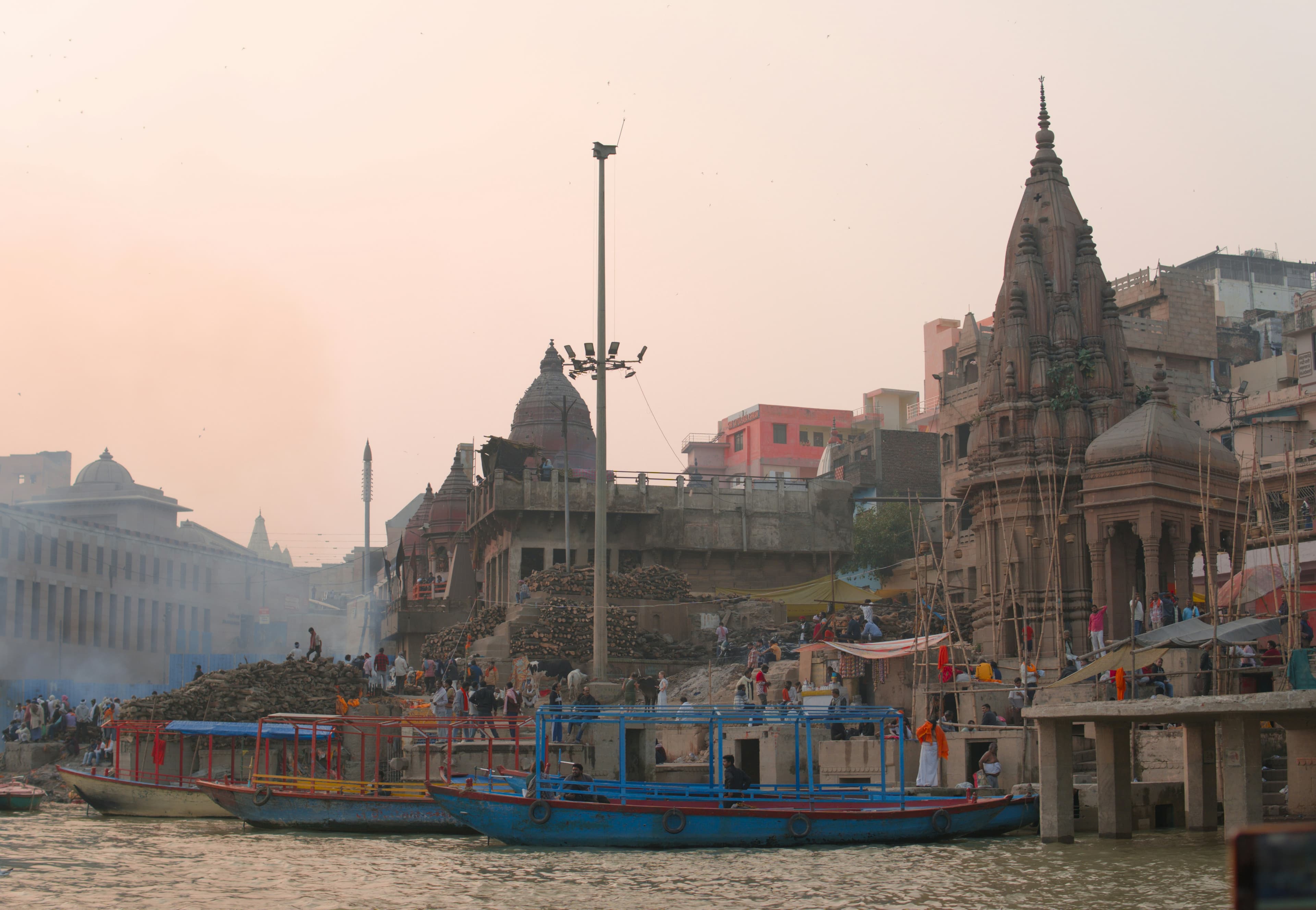
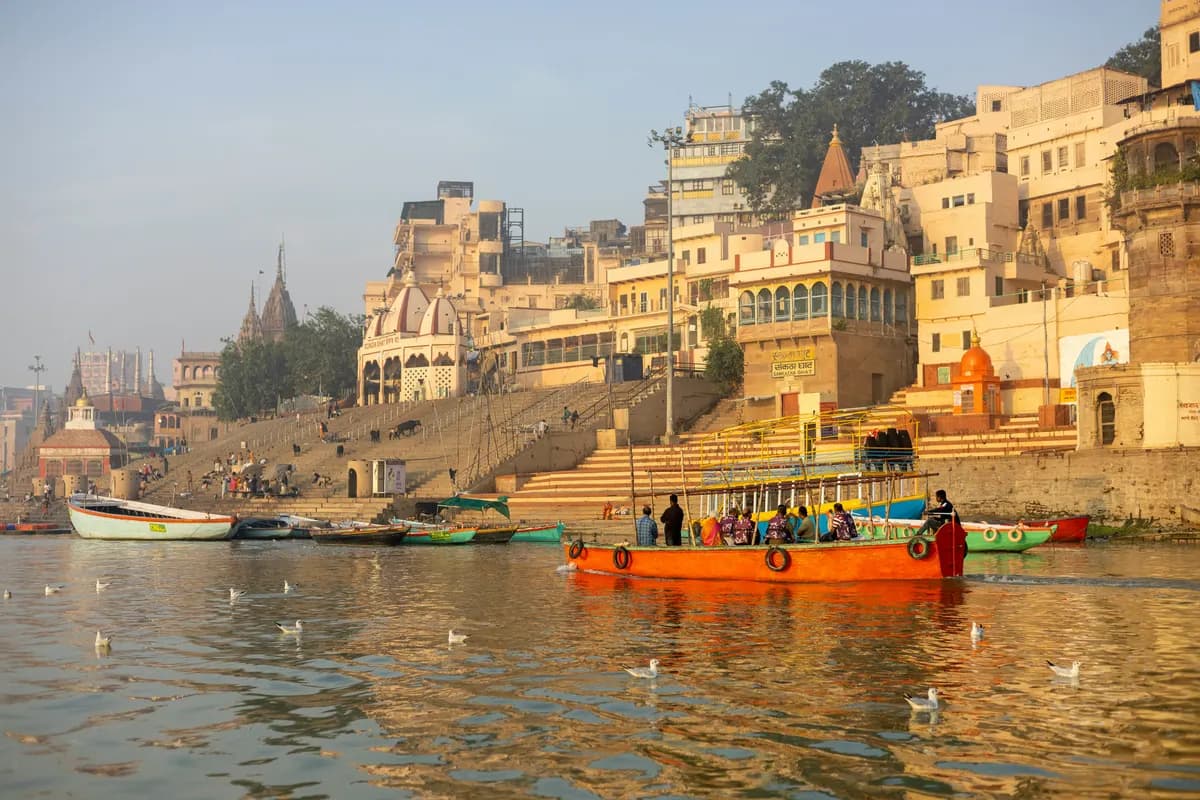
The ghats — riverside stone steps stretching for several kilometres along the Ganges — are where that belief plays out daily, in bathing, prayer, laundry and cremation rites, all visible from a single boat ride. A sunrise trip along the water shows a completely different mood from the evening aarti's fire and drums: quieter, full of ordinary daily ritual rather than ceremony, with the city's skyline of temples and old buildings silhouetted behind the crowds gathering to bathe. The Kashi Vishwanath Temple, one of the twelve Jyotirlinga shrines dedicated to Shiva and among the most significant Hindu temples anywhere, sits a short walk from the main ghats, now connected to the riverfront by a wide pedestrian corridor that has made the walk considerably more atmospheric in recent years.
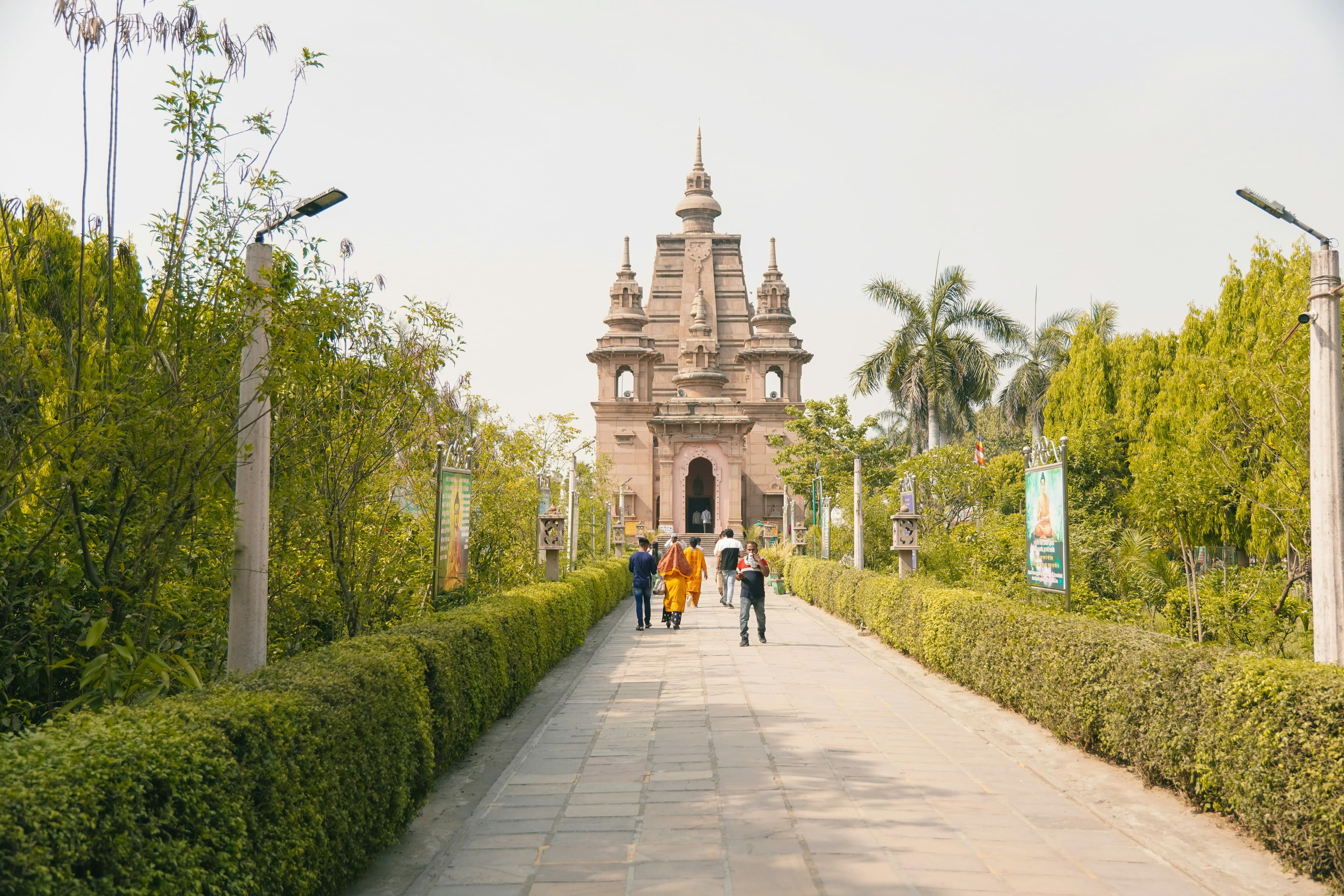
Most travellers build Varanasi in as a 2 to 3 day extension to a wider North India trip, flying in from Delhi or Agra. It rewards a slower pace than a rushed day trip would allow — the sunrise boat ride and the evening aarti show genuinely different sides of the same place, and both are worth building real time around. A short trip outside the city to Sarnath, where the Buddha delivered his first sermon after attaining enlightenment, adds a Buddhist counterpoint to Varanasi's intensely Hindu character, and is a common half-day add-on for travellers with an extra day to spare before continuing their itinerary.
What to See and Experience

Getting to Varanasi
Main Gateway
Lal Bahadur Shastri Airport (VNS) has direct domestic connections from Delhi, Mumbai and other major Indian cities, usually a 90-minute flight from Delhi. Varanasi is also well connected by overnight train.
Typical Entry Route
Most international travellers add Varanasi as an extension to a wider North India itinerary, flying in from Delhi or Agra rather than making it a standalone trip.
Visa Requirements
The standard Indian e-Visa applies for most nationalities and can be arranged online before departure. We recommend confirming current requirements for your passport before booking flights.
More to Know Before You Go
Kashi Vishwanath Temple
One of the twelve Jyotirlinga shrines dedicated to Shiva, and among the most significant Hindu temples in India, a short walk from the main ghats.
The Vishwanath Corridor
A recently redeveloped pedestrian corridor connecting the temple directly to the Ganges, making the walk between the two far more atmospheric than it once was.
Ramnagar Fort
A 17th-century fort on the opposite bank of the river, home to a museum of vintage cars, royal armoury and palanquins — a quieter half-day trip.
The Old City Lanes
Varanasi's narrow galis, too tight for cars, wind past centuries-old houses, shrines and shopfronts — best explored on foot with a guide who knows them.
The Banaras Gharana
Varanasi is one of the great centres of Hindustani classical music, with its own distinct musical tradition still taught and performed in the old city.
Assi Ghat
The southernmost of the major ghats, popular for a quieter sunrise and as a base for morning yoga sessions along the river.
October to March is Varanasi's Most Comfortable Season
Cool, dry mornings make the sunrise boat ride genuinely pleasant, and evenings along the ghats are comfortable for the Ganga Aarti. April to June runs very hot and humid, while the July to September monsoon can affect river levels and ghat access.
Nearby & Related Destinations
Getting Around by Private Car



Common Questions About Varanasi
Before you book Varanasi, here's what other travellers have asked.
Can't find your answer? Our team responds within 2 hours on WhatsApp and within 12 hours by email.
How many days do I need in Varanasi?
2 to 3 days is enough to see the evening Ganga Aarti, take a sunrise boat ride, visit Kashi Vishwanath Temple, and add a half-day trip to Sarnath. Many travellers add Varanasi as a 2-night extension to a wider North India itinerary.
Is Varanasi safe for foreign and solo travellers?
Yes — Varanasi is one of India's most visited cities by international tourists. The ghats and old-city lanes can feel intense for a first-time visitor, which is exactly why we recommend a private guide who can navigate them and explain what you're seeing.
Should I watch the sunrise boat ride or the evening aarti — or both?
Both, if you have the time — they show genuinely different sides of the city. The evening Ganga Aarti is a structured, dramatic ceremony; the sunrise boat ride is quieter and more personal, showing daily ritual life along the ghats.
Is it respectful to photograph the ghats and cremation sites?
The main ghats and the evening aarti are fine to photograph. Manikarnika Ghat, where cremations take place, should be approached with real sensitivity — photography there is generally discouraged, and we'll guide you on what's appropriate in the moment.
Can Varanasi be combined with Rajasthan and the Golden Triangle?
Yes, this is one of the most common ways we build it in — as an extension to a Delhi–Agra–Jaipur or wider Rajasthan itinerary, usually flying in from Delhi or Agra rather than requiring a separate trip.
2 to 3 days is enough to see the evening Ganga Aarti, take a sunrise boat ride, visit Kashi Vishwanath Temple, and add a half-day trip to Sarnath. Many travellers add Varanasi as a 2-night extension to a wider North India itinerary.
Yes — Varanasi is one of India's most visited cities by international tourists. The ghats and old-city lanes can feel intense for a first-time visitor, which is exactly why we recommend a private guide who can navigate them and explain what you're seeing.
Both, if you have the time — they show genuinely different sides of the city. The evening Ganga Aarti is a structured, dramatic ceremony; the sunrise boat ride is quieter and more personal, showing daily ritual life along the ghats.
The main ghats and the evening aarti are fine to photograph. Manikarnika Ghat, where cremations take place, should be approached with real sensitivity — photography there is generally discouraged, and we'll guide you on what's appropriate in the moment.
Yes, this is one of the most common ways we build it in — as an extension to a Delhi–Agra–Jaipur or wider Rajasthan itinerary, usually flying in from Delhi or Agra rather than requiring a separate trip.
Itinerary planned by Dhruv Poonia, Digital & Marketing Manager
Start Your Journey
Your Varanasi Journey Awaits.
When Will You Go?
Tell us how many days you have and what you'd like to see — we'll reply with a tailored Varanasi itinerary and quote, usually within 24 hours.