Thimphu — Bhutan's Capital
The only national capital in the world without a single traffic light — a small, walkable city where dzongs, markets and monuments sit close together.
Best Season
October–December & March–May
Ideal Trip Length
2 Days
Main Gateway
Paro Airport, then a 1 hr scenic drive
Languages Spoken
Dzongkha, English
Bhutan's Capital
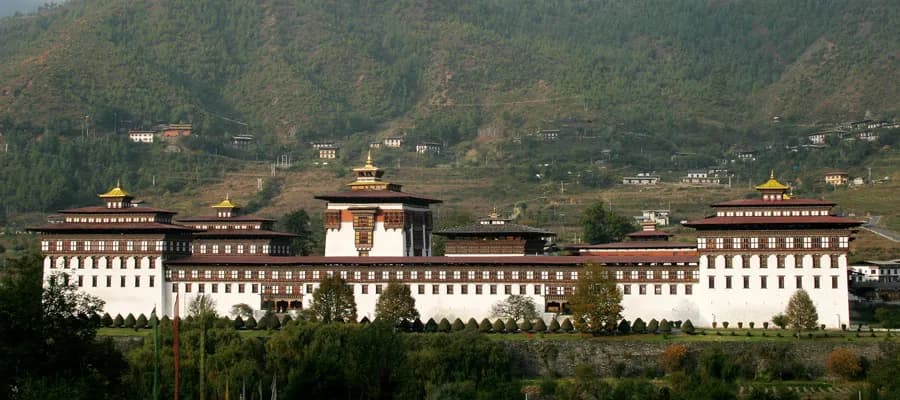
Thimphu holds a small but genuine distinction: it is the only national capital anywhere in the world without a single traffic light, its main intersection directed instead by a white-gloved traffic officer. That quirk says something real about the city — compact, unhurried, and shaped by building codes that require traditional Bhutanese architecture even on new construction. Tashichho Dzong, the whitewashed fortress-monastery on the Wang Chhu river, anchors the city both administratively and spiritually, housing the King's secretariat alongside Bhutan's central monastic body under one roof — a pairing of government and religion that's rare to see so directly combined.
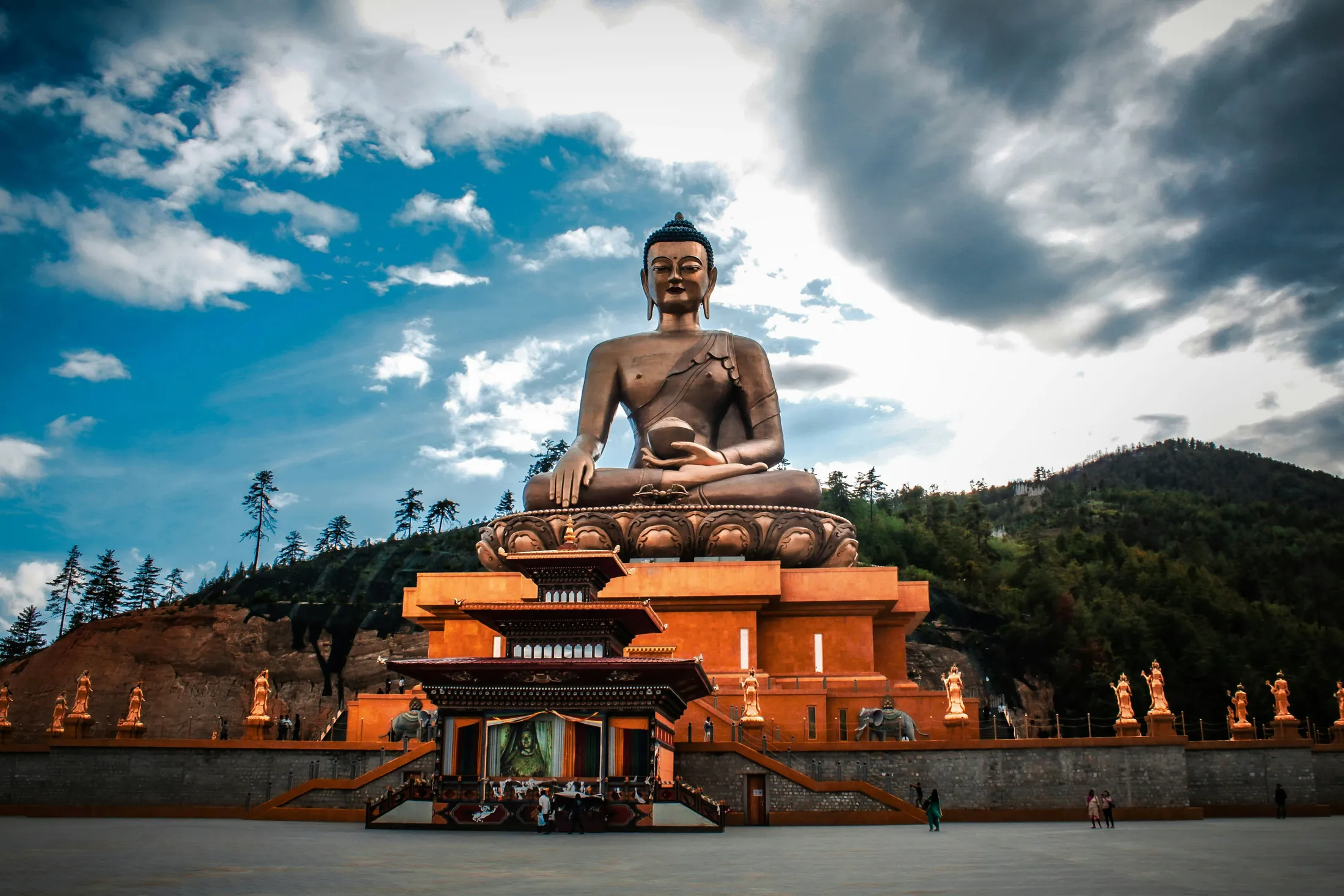
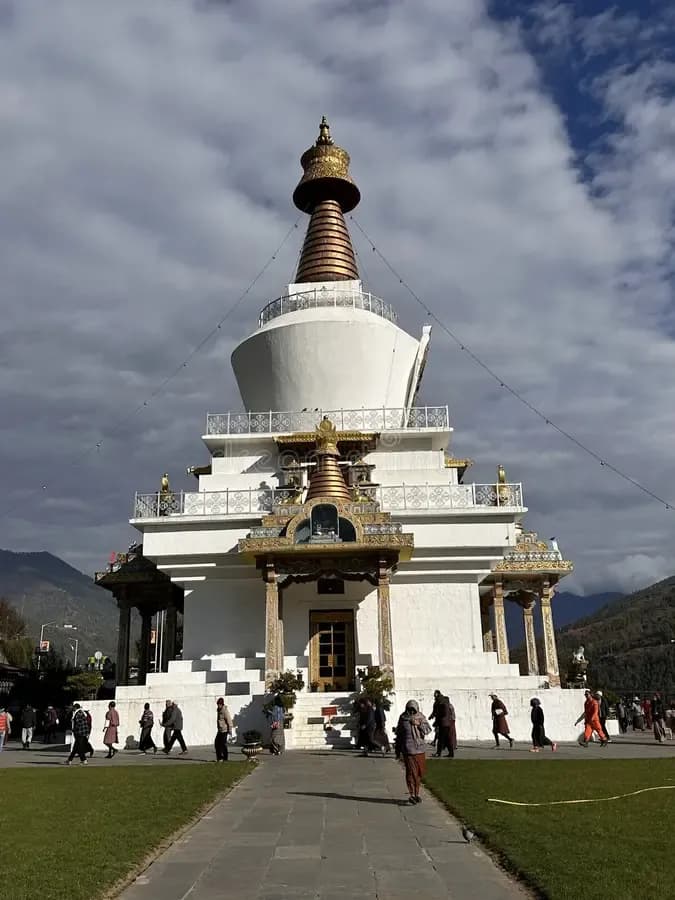
Above the city, the 51-metre gilded Buddha Dordenma looks out over the valley, its base containing over 100,000 smaller Buddha statues. Closer to street level, the Memorial Chorten remains one of the city's most active religious sites, circled daily by locals, while the riverside Weekend Market offers one of the more genuine glimpses of everyday Bhutanese life available to visitors, as farmers from across the valley sell produce, cheese and handicrafts. As the closest major town to Paro Airport after Paro itself, Thimphu is where most Bhutan itineraries begin before continuing on to Punakha and Gangtey.
What to See
Getting There
By Air via Paro
Bhutan has only one international airport, at Paro, with direct flights from Kathmandu, Delhi, Kolkata, Bangkok and Singapore. Thimphu is then a scenic 1 hour drive away.
Sustainable Development Fee & Licensed Guide
Most foreign visitors to Bhutan pay a daily Sustainable Development Fee and travel with a licensed local guide arranged through a registered tour operator — we handle both as part of your booking.
Overland from India
It's also possible to enter by road via the Phuentsholing border crossing, though flying into Paro is faster and is what we arrange for nearly all international clients.
What Makes This Different
The Only Capital Without Traffic Lights
Thimphu remains the only national capital in the world without a single traffic light — a white-gloved traffic officer directs the main intersection by hand instead.
A Small, Walkable Capital
Unlike most national capitals, central Thimphu is compact enough to explore comfortably on foot, with the dzong, markets and monuments all close together.
Government and Religion Under One Roof
Tashichho Dzong housing both the monastic body and the seat of government reflects how closely Bhutanese governance and Buddhism remain intertwined.
A Living Example of Gross National Happiness
Bhutan's development philosophy prioritises wellbeing over pure economic growth, and Thimphu — with its building codes requiring traditional architecture even on new construction — shows this in practice.
An Easy First Stop in Bhutan
As the closest major town to Paro Airport after Paro itself, Thimphu is where most Bhutan itineraries begin.
October–December & March–May are Best
These windows offer the clearest mountain views and the most comfortable temperatures, avoiding the summer monsoon and the coldest winter weeks.
Nearby & Related Destinations
Getting Around by Private Car


Common Questions
What first-time visitors to Thimphu usually want to know.
Can't find your answer? Our team responds within 2 hours on WhatsApp and within 12 hours by email.
How many days should we plan for Thimphu?
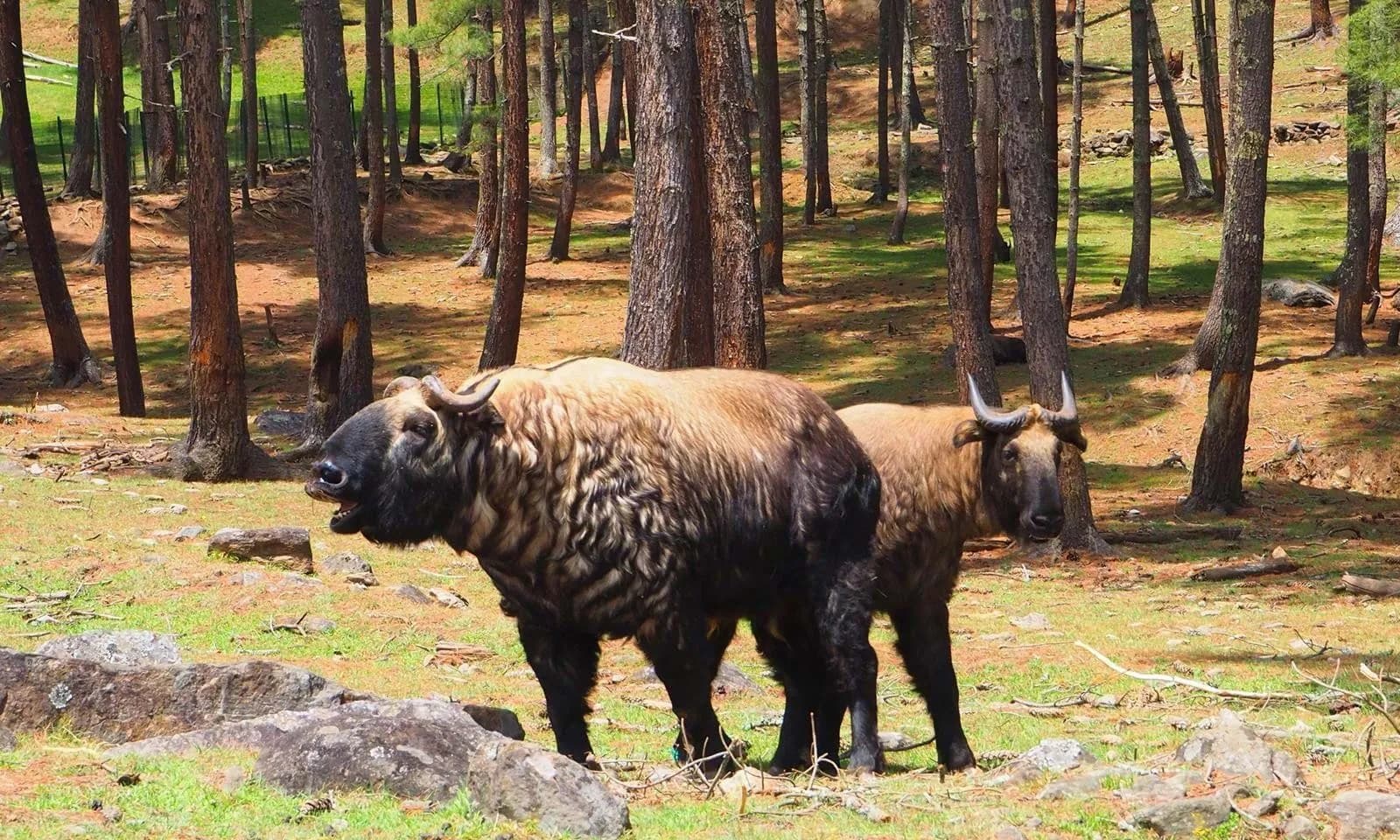
2 days is enough to see Tashichho Dzong, the Buddha Dordenma statue, the Memorial Chorten and the Takin Preserve at a comfortable pace.
Do we need a guide to visit Bhutan?
Yes — most foreign visitors travel with a licensed local guide and pay a daily Sustainable Development Fee, both arranged through a registered tour operator like us as part of your booking.
Is Thimphu a good first stop in Bhutan?
Yes — as the closest major town to Paro Airport, Thimphu is where most Bhutan itineraries begin, before continuing on to Punakha and Gangtey.
When is the best time to visit?
October to December and March to May offer the clearest mountain views and the most comfortable temperatures, avoiding the summer monsoon and the coldest winter weeks.
2 days is enough to see Tashichho Dzong, the Buddha Dordenma statue, the Memorial Chorten and the Takin Preserve at a comfortable pace.
Yes — most foreign visitors travel with a licensed local guide and pay a daily Sustainable Development Fee, both arranged through a registered tour operator like us as part of your booking.
Yes — as the closest major town to Paro Airport, Thimphu is where most Bhutan itineraries begin, before continuing on to Punakha and Gangtey.
October to December and March to May offer the clearest mountain views and the most comfortable temperatures, avoiding the summer monsoon and the coldest winter weeks.
Itinerary planned by Dhruv Poonia, Digital & Marketing Manager
Start Your Journey
Your Journey to Thimphu Awaits.
When Will You Go?
Tell us how many days you have and what you'd like to see — we'll reply with a tailored itinerary and quote, usually within 24 hours.