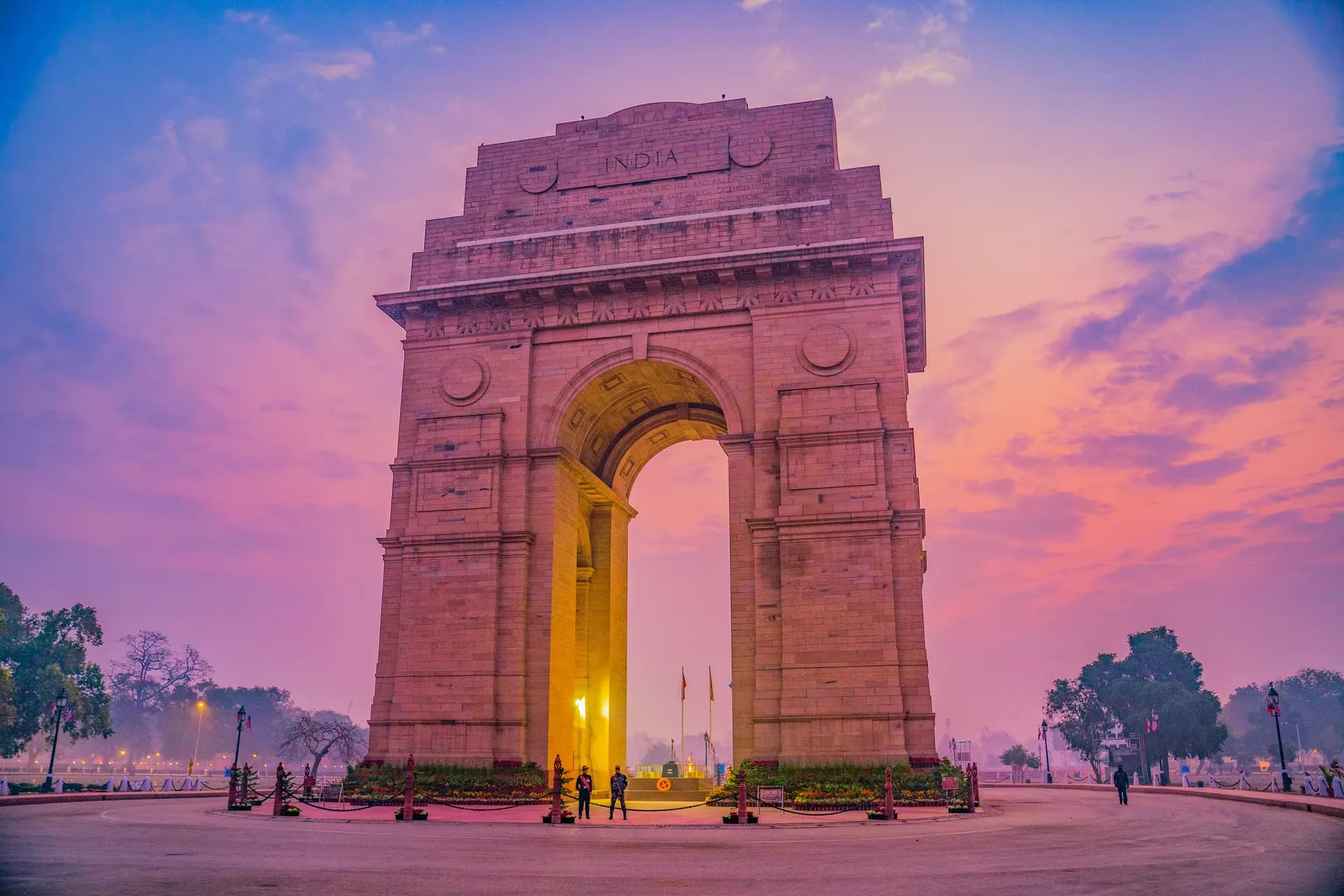
Delhi — India's Layered, Living Capital
Mughal forts, colonial avenues and the busiest bazaars in North India — Delhi is where most international journeys through India begin.
Best Season
October – March
Ideal Trip Length
2 – 3 Days
Main Gateway
Delhi (DEL)
Languages Spoken
English, Hindi
Three Cities of Delhi, Layered Into One
Delhi isn't one city so much as several, built one on top of another — Mughal-era Old Delhi with its forts and mosques, colonial-era New Delhi with its wide avenues and government buildings, and the fast-moving modern capital that surrounds both. For most of our international guests, it's also the first place they land in India, and the natural starting point for a wider Golden Triangle or Rajasthan itinerary. Few cities anywhere let you walk from a 17th-century Mughal fort to a British colonial parliament building to a glass- fronted modern shopping district in the space of a single day, and Delhi's layered history is precisely why that's possible here.
Old Delhi centres on the Red Fort and Jama Masjid, India's largest mosque, surrounded by Chandni Chowk's dense lanes of spice traders, wedding-card printers and some of the country's most celebrated street food stalls — best explored on foot or by cycle rickshaw rather than car, given how narrow and crowded the lanes genuinely are. New Delhi, built by the British in the early 20th century as the seat of colonial government, feels almost like a different city entirely — wide, tree-lined avenues, India Gate, and the imposing Rashtrapati Bhavan (the President's residence), all laid out on a scale meant to project imperial authority.
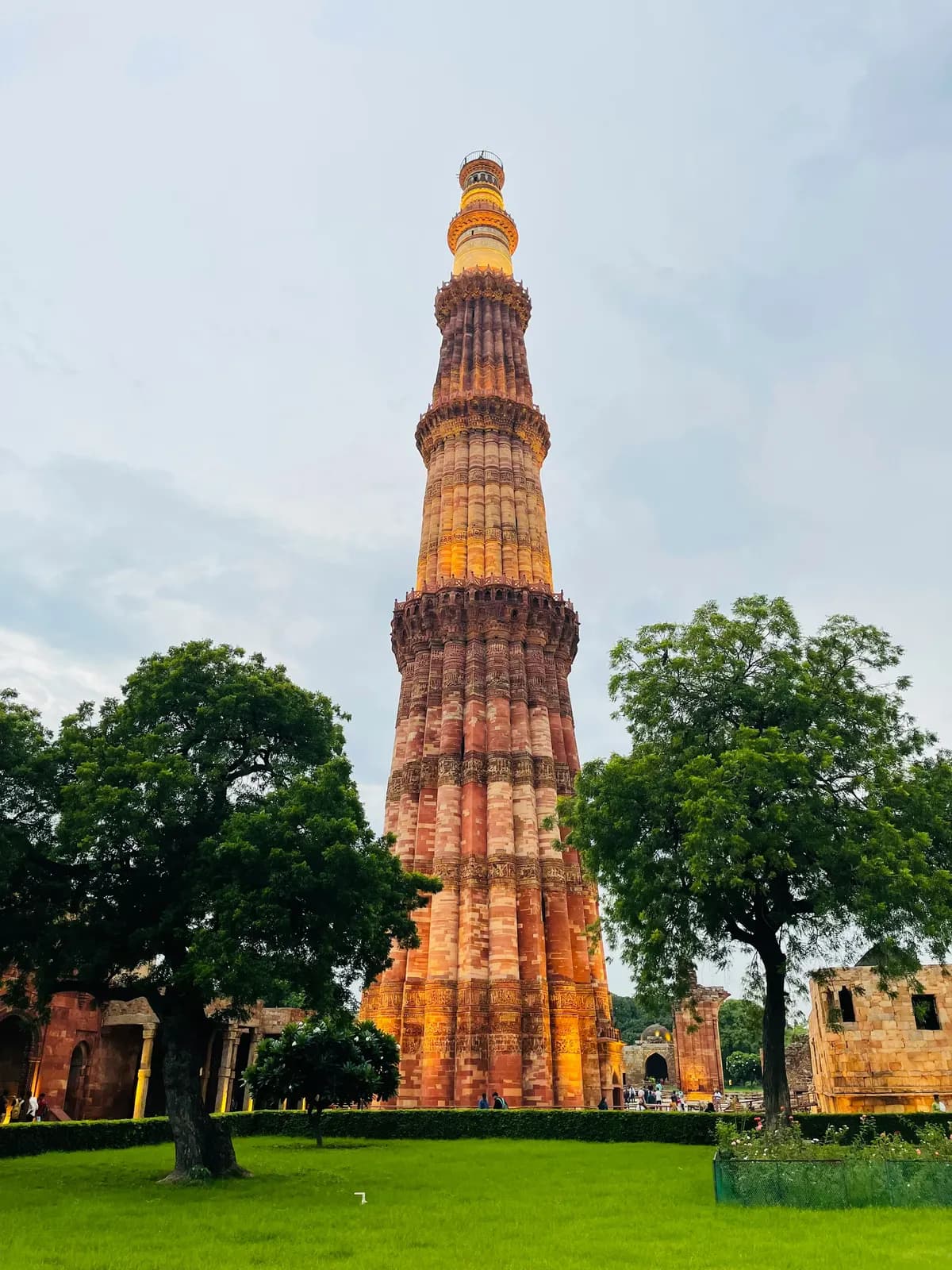
What makes Delhi worth two or three days on its own, rather than just an overnight stop, is the sheer range packed into one city — Mughal monuments, world-class museums, some of the best regional Indian food anywhere in the country, and bazaars that have operated the same way for centuries, all connected by an easy-to-use metro and, on our itineraries, your own private guide and driver. Humayun's Tomb, a UNESCO World Heritage Site and the architectural forerunner to the Taj Mahal, and the Qutub Minar, the tallest brick minaret in the world, both add genuine depth for travellers who want more than a quick highlights tour before continuing on to Agra or Rajasthan.
What to See in Delhi
Getting to Delhi
Main Gateway
Indira Gandhi International Airport (DEL) is India's busiest airport and the main international entry point for most travellers, with direct connections from the USA, UK, Europe, Australia and the Middle East.
Typical Entry Route
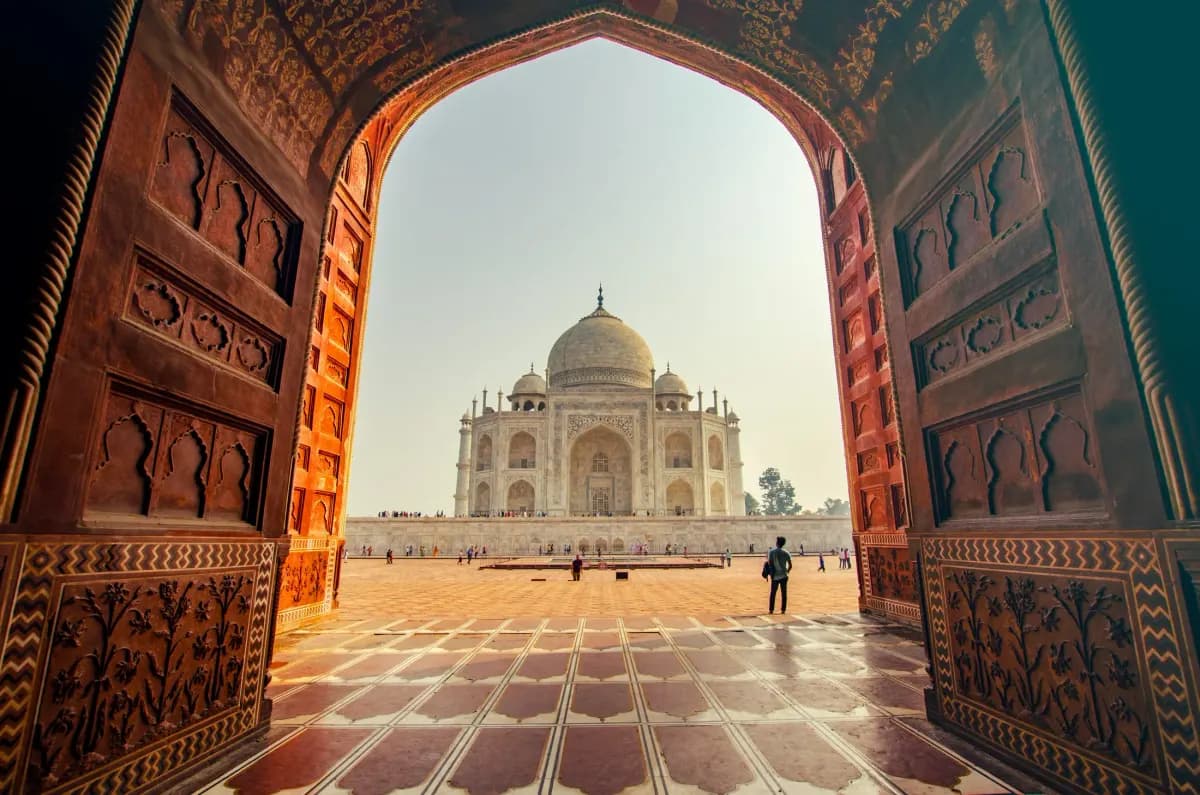
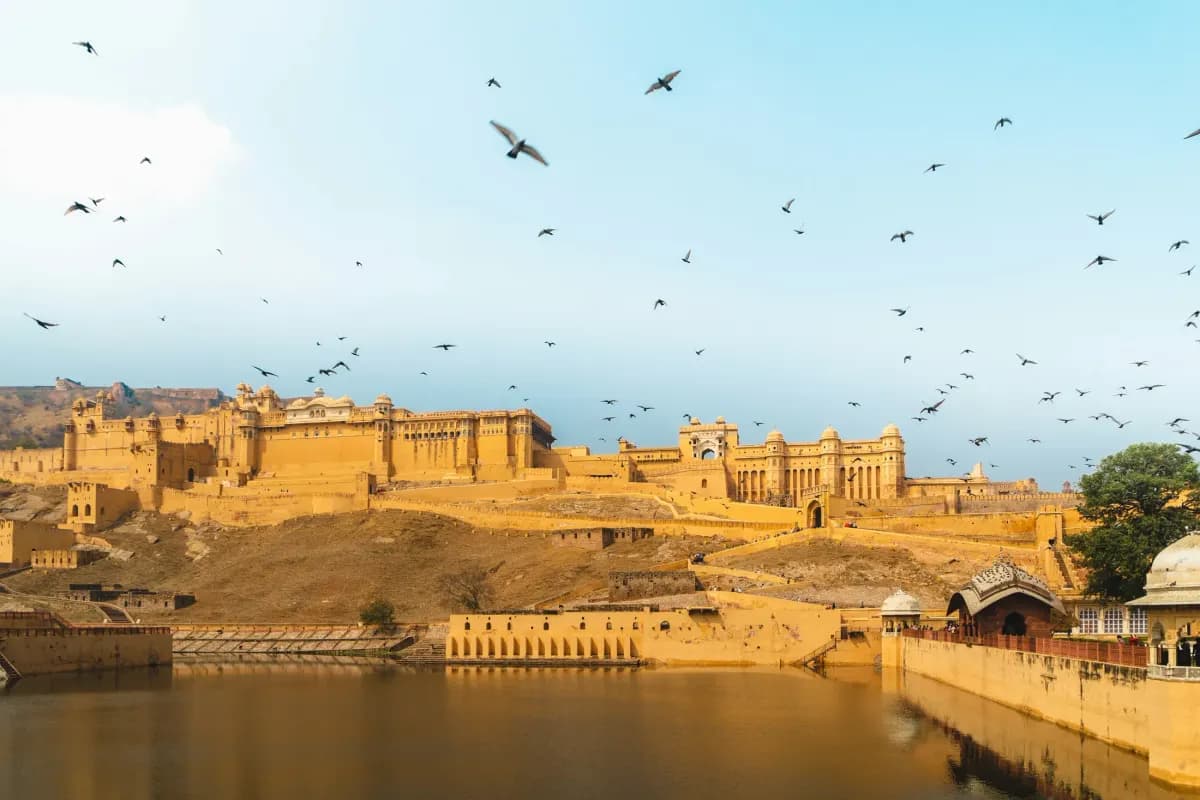
Delhi is where most international itineraries begin. From here, most travellers continue on by road or train to Agra and Rajasthan as part of a wider Golden Triangle or Rajasthan trip.
Visa Requirements
The standard Indian e-Visa applies for most nationalities and can be arranged online before departure. We recommend confirming current requirements for your passport before booking flights.
What Makes This City Different
Mughal & Colonial Landmarks
Red Fort, Humayun's Tomb and Jama Masjid sit alongside colonial-era avenues around India Gate and Rashtrapati Bhavan.
World-Class Museums
The National Museum and Gandhi Smriti offer some of the deepest context for the history you'll see across the rest of your trip.
India's Best Food Scene
From Old Delhi street food in Chandni Chowk to fine dining, Delhi has the widest range of Indian regional cuisine in one city.
Bazaars to Boutiques
Chandni Chowk's chaotic lanes, Dilli Haat's crafts market, and upscale boutiques in South Delhi cover every kind of shopping.
Easy Metro Connectivity
The Delhi Metro connects most major sights directly, making it easy to combine with your own private guide and driver.
Gateway to the Golden Triangle
Delhi is the natural starting point for the classic Delhi–Agra–Jaipur circuit and onward into Rajasthan.
October to March is Delhi's Most Comfortable Season
Cool, dry days make sightseeing comfortable across the city. April to June runs very hot, while November and December can bring heavy smog — worth knowing if you have respiratory sensitivities. October, early November, February and March tend to offer the best balance of comfortable weather and clearer air.
Nearby & Related Destinations
Getting Around by Private Car



Common Questions About Delhi
Before you book Delhi, here's what other travellers have asked.
Can't find your answer? Our team responds within 2 hours on WhatsApp and within 12 hours by email.
How many days do I need in Delhi?
2 to 3 days is enough to see Old and New Delhi's main sights comfortably. Many travellers use Delhi as the opening stop of a longer trip rather than a standalone destination, spending 1 to 2 nights before continuing to Agra or Rajasthan.
Is Delhi safe for foreign and solo travellers?
Yes — Delhi is India's most-visited city by international tourists and its main sights are well set up for foreign visitors. As in any major capital city, we recommend a private guide and driver rather than relying on unfamiliar public transport, which is how we run every Delhi itinerary.
Should I stay in Old Delhi or New Delhi?
New Delhi generally offers more comfortable, modern hotels and easier access by car. Old Delhi puts you closer to Red Fort, Jama Masjid and Chandni Chowk, but its narrow lanes can feel intense for a first-time visitor — we typically recommend New Delhi as a base with a guided day trip into Old Delhi.
Should I combine Delhi with Agra and Jaipur?
Almost always, yes. Delhi, Agra and Jaipur together form the classic Golden Triangle, and Delhi is the natural starting point since it's where most international flights arrive.
What about Delhi's air quality?
Delhi's air quality is noticeably worse in winter, particularly November and December, which is worth knowing if you have respiratory sensitivities. October to early November and February to March offer a good balance of cooler weather with better air quality.
2 to 3 days is enough to see Old and New Delhi's main sights comfortably. Many travellers use Delhi as the opening stop of a longer trip rather than a standalone destination, spending 1 to 2 nights before continuing to Agra or Rajasthan.
Yes — Delhi is India's most-visited city by international tourists and its main sights are well set up for foreign visitors. As in any major capital city, we recommend a private guide and driver rather than relying on unfamiliar public transport, which is how we run every Delhi itinerary.
New Delhi generally offers more comfortable, modern hotels and easier access by car. Old Delhi puts you closer to Red Fort, Jama Masjid and Chandni Chowk, but its narrow lanes can feel intense for a first-time visitor — we typically recommend New Delhi as a base with a guided day trip into Old Delhi.
Almost always, yes. Delhi, Agra and Jaipur together form the classic Golden Triangle, and Delhi is the natural starting point since it's where most international flights arrive.
Delhi's air quality is noticeably worse in winter, particularly November and December, which is worth knowing if you have respiratory sensitivities. October to early November and February to March offer a good balance of cooler weather with better air quality.
Itinerary planned by Dhruv Poonia, Digital & Marketing Manager
Start Your Journey
Your Delhi Journey Awaits.
Where Will You Begin?
Tell us how many days you have and what you'd like to see — we'll reply with a tailored Delhi itinerary and quote, usually within 24 hours.