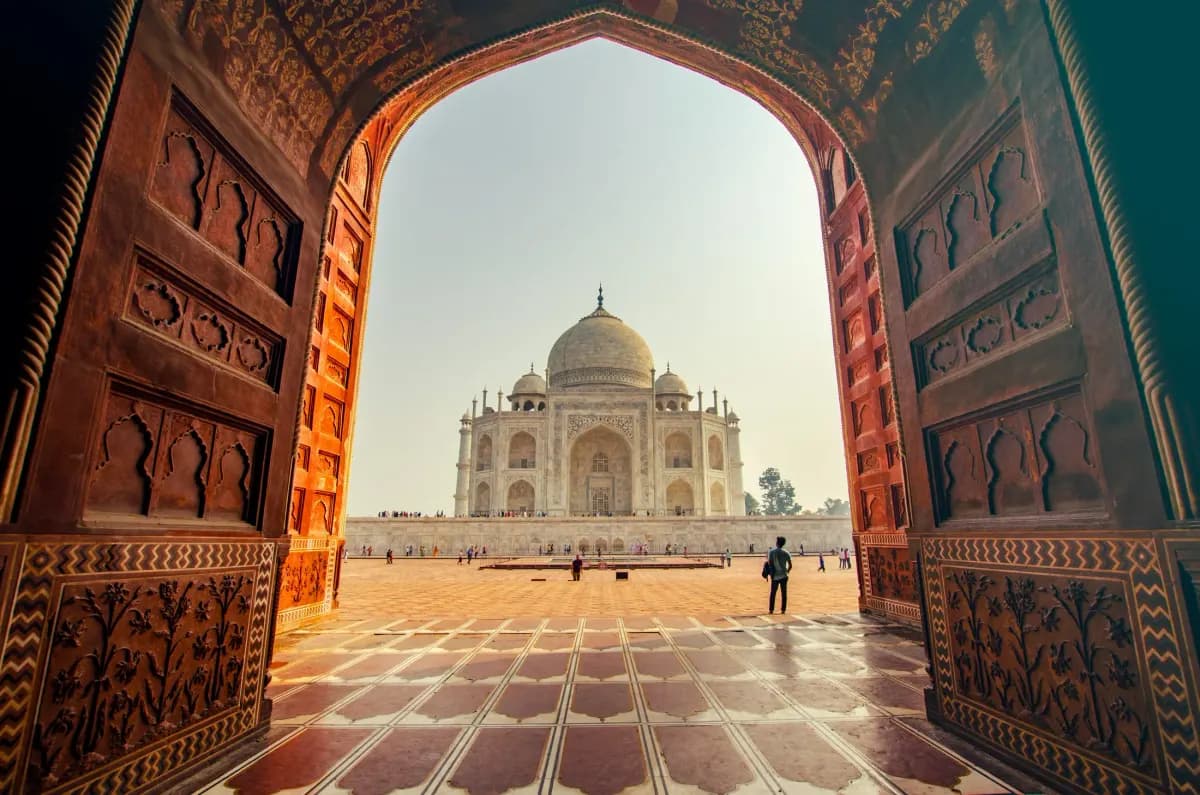
Golden Triangle Itinerary: A 5 to 6 Day Plan
Delhi, Agra and Jaipur day by day, with real drive times and the one scheduling rule that catches people out.
By Dhruv Poonia, Digital & Marketing Manager, Colourful Indian Holidays · Published 28 September 2026
Already know you want this trip? Skip ahead and tell us your dates.
The Golden Triangle, made up of Delhi, Agra and Jaipur, is the most popular first itinerary in India, and it is easy to see why. In about a week it covers the Mughal capital, the Taj Mahal and the Pink City of Rajasthan, and the routes between them are well travelled and reliable. What separates a good Golden Triangle from a tiring one is mostly planning: how many days, which order, and where the long drives fall. This guide sets out a day-by-day plan and explains the choices behind it. For the full range of fixed routes we run, see our Golden Triangle tour packages.
The Golden Triangle at a Glance
- Ideal length: 6 days (2 Delhi, 1 Agra, 2 Jaipur, plus departure).
- Shortest workable length: 4 days, though it's a tight pace.
- Longest drive: Jaipur to Delhi, about 280 km, 5 to 6 hours.
- The one rule: never schedule the Taj Mahal on a Friday — it's closed.
- Best season: October to March.
The Three Cities in a Nutshell
Delhi is where most international flights land, and it layers Mughal monuments over colonial avenues: Humayun's Tomb, Old Delhi's mosque and bazaars, and the wide boulevards of New Delhi. Agra exists on the map largely because of the Taj Mahal, though Agra Fort, the red-sandstone Mughal stronghold beside the river, deserves a visit of its own. Jaipur is the Pink City, named for the terracotta wash applied to its old buildings in 1876 for a visiting British prince, and it is where the trip turns from Mughal India to the forts and palaces of Rajasthan.
How Far Apart Are They?
- Delhi to Agra: roughly 230 km, 3.5 to 4 hours by road on the expressway
- Agra to Jaipur: roughly 240 km, around 5 hours
- Jaipur to Delhi: roughly 280 km, 5 to 6 hours
None of these is a short hop, and that shapes everything. Each transfer eats a large part of a day, so the itinerary has to leave room around it. Our guide to getting around India compares driving with trains and flights if you want to weigh the options.
The 6-Day Golden Triangle, Day by Day
Six days is the length we recommend, and it is the basis of our Golden Triangle Classic. It gives Delhi a proper day, keeps Agra to one night, and gives Jaipur the time it needs.
- Day 1, Delhi: arrive, meet your driver at the airport, and settle in. Keep the evening light.
- Day 2, Delhi sightseeing: a full day across Old and New Delhi, including Humayun's Tomb, the Jama Masjid area and the colonial boulevards around India Gate.
- Day 3, Delhi to Agra: a drive of three and a half to four hours, then Agra Fort in the afternoon and a first look at the Taj Mahal as the light softens.
- Day 4, Agra to Jaipur: the Taj Mahal at opening for sunrise, then on to Jaipur, roughly five hours away.
- Day 5, Jaipur: Amber Fort early, then the City Palace, Jantar Mantar observatory and Hawa Mahal, with time in the bazaars.
- Day 6, departure: transfer to Jaipur airport, or back to Delhi for an onward flight.
For the Taj Mahal specifically, our Taj Mahal visiting guide covers tickets, timings and the best light.
This is exactly our standard 6-day route, ready to book. View the Classic Golden Triangle Tour
The Friday Rule
The Taj Mahal is closed to general visitors every Friday, and it is the single most common scheduling error on this route. Work backwards from your Agra day and make sure it does not land on a Friday. In the standard plan above, Agra sightseeing happens on days three and four, so if your arrival date would put the Taj on a Friday, shift the whole trip a day either way, or reverse the direction so Agra falls at a different point.
How to Structure Your Delhi Day
Delhi rewards a plan, because it is huge and traffic is heavy. A sensible day pairs the older parts of the city, Humayun's Tomb and the Old Delhi mosque and bazaar district, with the broader colonial avenues around India Gate. Humayun's Tomb is a UNESCO World Heritage Site and the red-sandstone forerunner of the Taj Mahal, so it makes a good primer for what comes next. Old Delhi is at its best in the morning, before the heat and the crowds, while the tree-lined avenues of New Delhi are pleasant later. Qutub Minar, another UNESCO site, is an easy addition if you have the energy. Do not try to see everything: pick a few sights and give them time.
How to Structure Your Agra Day
Agra is best treated as a short stay built around two visits. On the way in, Agra Fort makes an easy first stop, because it gives you the story of the Mughal court that built the Taj Mahal and lets you see the monument from a distance, along the river. The Taj Mahal itself is best at one end of the day, ideally at opening the next morning, with the rest of the morning free before the drive to Jaipur. That arrangement keeps the long transfer to the afternoon, after you have had the best of the light and the coolest hours.
How to Structure Your Jaipur Days
Jaipur is the richest stop, so give it the most time. Start at Amber Fort early, when the crowds are lightest, and go up to the entrance by jeep or, if you prefer, on foot. The City Palace, partly still home to the former royal family, comes next, then the Jantar Mantar observatory, a UNESCO World Heritage Site of enormous stone instruments used for astronomy, and the Hawa Mahal with its honeycomb facade. Leave the late afternoon for the bazaars of the old walled city, which are at their liveliest as the light turns warm.
Shopping Stops and Commissions
Agra is known for marble inlay and Jaipur for textiles, jewellery and gems, and both are worth exploring, but this is where visitors are most likely to be steered into shops by drivers or guides who earn a commission. There is nothing wrong with buying something you like, but decide in advance whether you want a shopping stop at all, and say no politely to stops you did not ask for. Our solo travel guide explains the common patterns in more detail.
What to Pack
Comfortable walking shoes matter more than anything else, since every stop involves long stretches on foot and you may need to slip them off at religious sites and inside the Taj Mahal. Light, modest clothing suits the whole route, with a warm layer for winter mornings, which can be cold and foggy. Bring sun protection, a refillable water bottle, and a small bag, since large bags can slow you down at security. Bring a photocopy of your passport and visa as well.
Leaving Room in the Plan
The best Golden Triangle itineraries are not the fullest ones. Leave gaps: a free afternoon in Jaipur, an unhurried breakfast in Agra, a slow first evening in Delhi. Those gaps are where the trip stops feeling like a schedule and starts feeling like travel, and they give you slack when something runs late, as things do on Indian roads. If you are torn between adding a sight and keeping a gap, keep the gap.
What Drives the Cost of a Golden Triangle Tour?
We do not publish a single price here, because the same six days can cost very different amounts depending on choices you control. The biggest factors are the hotel tier, whether you travel privately or in a group, the number of people sharing the vehicle, and how many extras such as safaris or special experiences you add. A private car and driver costs the same whether one person or four share it, so the cost per head falls as the group grows. A room with a Taj Mahal view in Agra is a genuine upgrade for one night, and a sensible place to spend if you are going to spend anywhere.
How Far Ahead Should You Book?
October to March is the busy season, and the better hotels in Agra and Jaipur fill up first. Two to three months ahead is a comfortable window, and earlier is wise if you want a specific hotel, a Taj view room, or travel around Diwali or the Christmas and New Year period. Booking early also gives you time to sort out your visa without pressure.
Cutting It to 5 Days
If you only have five days, the cleanest cut is Delhi. Reduce it to one night, with sightseeing compressed into the morning after arrival, and keep Agra and Jaipur as they are. This is workable if you arrive early in the day and are not badly jet-lagged, and it protects the two stops most people care about most. Avoid cutting Jaipur, since it holds the most sightseeing of the three.
Cutting It to 4 Days
Four days is possible and we can build it, but it is a compromise. You will spend more time in the car than at the sights, with two long transfers in four days, and Delhi is reduced to an arrival and a short tour. It works for people whose priority is simply to have seen the Taj Mahal and Jaipur, and who accept a tight pace. If you can find a fifth or sixth day, take it.
If you can stretch to the full 6 days, it's worth it. Compare it to our standard 6-day route
Should You Reverse the Direction?
Delhi, Agra, Jaipur is the standard order because most flights land in Delhi and Jaipur is a natural starting point for onward travel into Rajasthan. Doing it in reverse works equally well and is the better choice if you are continuing from Rajasthan into Delhi, or if the Friday closure forces a different order. Either way, the driving is the same; the difference is where you start and finish.
Adding Days: Where to Extend
The Golden Triangle is a core that extends naturally, and each of the additions below is available as a fixed route. Adding Ranthambore brings in a tiger reserve. Adding Udaipur gives you lakes and palaces at a slower pace. Adding Varanasi takes the trip toward the Ganges, and adding Ajmer and Pushkar adds Rajasthan's religious side. If you would rather see the whole of Rajasthan, our Rajasthan itinerary guide explains how to plan it.
When Is the Best Time to Go?
October to March is the comfortable window, with clear days and cool evenings. Winter mornings can be foggy, especially in December and January, which can hide the Taj Mahal at dawn, so keep a backup plan for the Agra morning. Summer is very hot and most travellers avoid it. Our best-time-to-visit guide has the month-by-month picture.
Getting the Details Right
- Sort your visa early. Our e-Visa guide explains the process, including the newer arrival card.
- Arrange airport pickup so you are not negotiating a taxi after a long flight.
- Book the Agra hotel with the Taj in mind. A room with a view is a real upgrade for one night.
- Keep the first day light. Jet lag and Delhi's intensity are easier after a proper sleep.
- Leave the middle of the Taj day free. The best light is at the ends of the day.
Which Itinerary Length Suits You?
Families often prefer a slower version with fewer transfers, and our Family Holidays itinerary is built that way. If you are interested in the monuments themselves, our UNESCO Heritage Sites route goes deeper, and our Palace and Fort Tours focus on Rajasthan's forts. Travellers coming from the United States, the United Kingdom or Australia will find country-specific planning notes in our USA, UK and Australia guides.
Common Mistakes
- Landing the Taj Mahal day on a Friday.
- Squeezing the trip into four days and spending most of it on the road.
- Cutting Jaipur to save time, when it holds the most to see.
- Planning a full sightseeing day straight after a long transfer.
- Travelling in peak summer and keeping a winter-length schedule.
- Leaving it too late to book hotels in the October to March season.
Bringing It All Together
The Golden Triangle works best at six days, with two nights in Delhi, one in Agra and two in Jaipur, and with the Friday rule checked before you fix your dates. Shorter is possible if you accept a tighter pace; longer is easy with an extension. Tell us your dates and how many days you have, and we will build the route around them, with the Taj Mahal on the best possible day.
Dhruv Poonia is the Digital & Marketing Manager for Colourful Indian Holidays, working alongside a family travel business that has arranged tours across India, Nepal and Bhutan since 2007. He also oversees the company's sister sites, Rajasthan Travel Agency and Palace on Wheels Tour.
He writes and maintains the destination guides, route information and travel advice published on this site, drawing on his day-to-day work planning itineraries for international travellers to keep every page accurate and current.
Start Your Journey
Ready to Plan Your Golden Triangle?
Tell Us Your Dates.
Tell us how many days you have and we will build the route, with the Taj Mahal on the best available day — reply within 24 hours.