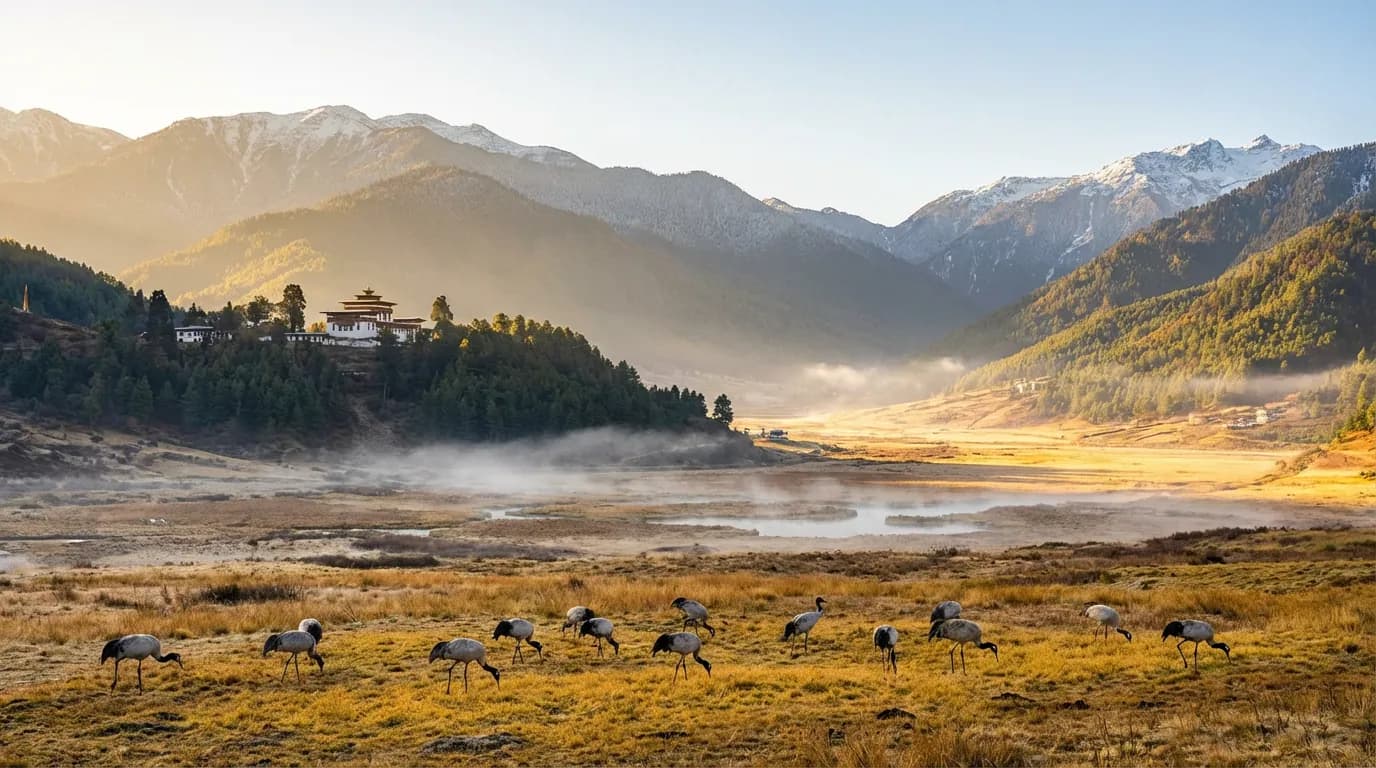
Gangtey — Valley of the Black-Necked Cranes
Bhutan's only glacial valley, and a rare winter home for endangered black-necked cranes — the quietest, least-visited stop on a Bhutan circuit.
Best Season
November–February (Crane Season)
Ideal Trip Length
1 – 2 Days
Main Gateway
~4–5 hr drive from Thimphu or Punakha
Languages Spoken
Dzongkha, English
Valley of the Black-Necked Cranes
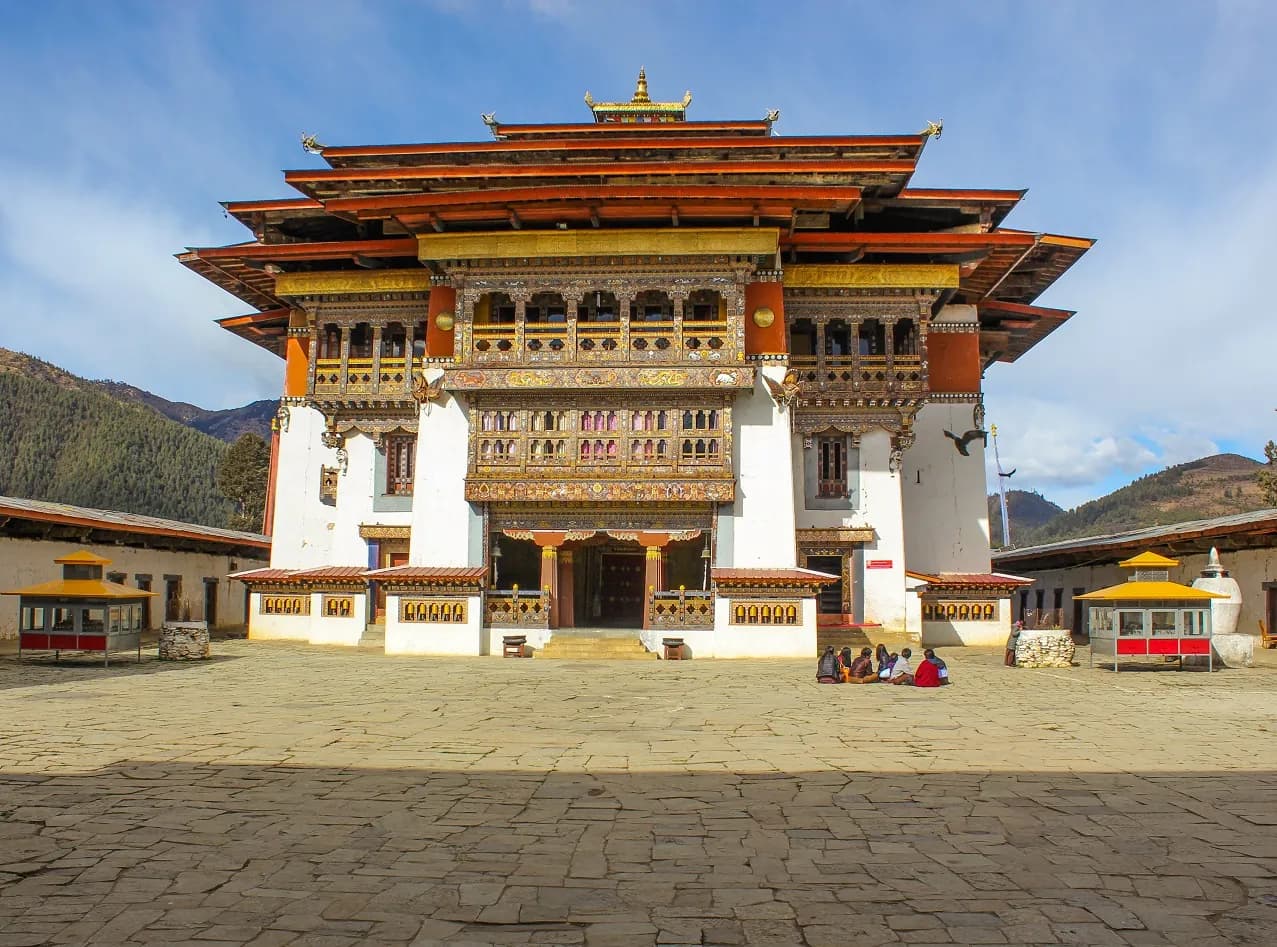
Gangtey sits above the Phobjikha Valley, a wide, U-shaped glacial valley of open marshland that looks unlike anywhere else on a typical Bhutan itinerary — flat, quiet, and ringed by forested hills rather than dominated by a single dzong or monastery. Gangtey Monastery, a 17th-century Nyingma institution, sits on a ridge above the valley floor and remains the area's spiritual centre, while the gentle Gangtey Nature Trail gives visitors an easy, roughly 90-minute walk through pine forest and small farming villages along the valley's edge.
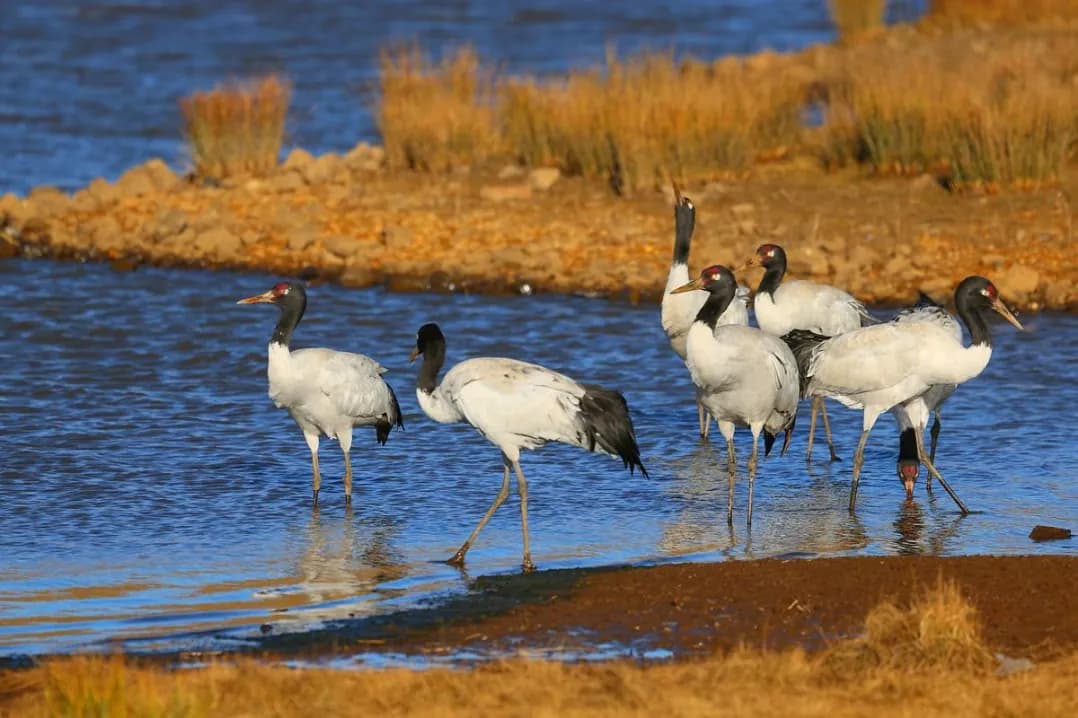
What makes Phobjikha genuinely distinctive is what happens here every winter: endangered black-necked cranes migrate down from the Tibetan Plateau to roost in the valley, typically arriving from late October and staying through February. The local community has organised its conservation efforts specifically around protecting them — electricity cables in the valley are laid underground rather than on poles, purely to keep the cranes' flight paths clear, a small but telling example of how seriously the area takes this responsibility. With no airport and a noticeably smaller visitor footprint than Thimphu or Paro, Gangtey makes a naturally quiet final stop on a longer Bhutan circuit.
What to See
Getting There
By Road from Punakha or Thimphu
Roughly 1.5 hours from Punakha or 4 to 5 hours from Thimphu, crossing the Pele La pass into the Phobjikha Valley.
No Airport
Like Punakha, Gangtey has no airstrip — it's reached entirely by road, usually as the final leg of a wider Bhutan circuit.
Sustainable Development Fee & Licensed Guide
As with the rest of Bhutan, most foreign visitors travel with a licensed local guide and pay a daily Sustainable Development Fee, both arranged through a registered tour operator.
What Makes This Different
Bhutan's Only Glacial Valley
Phobjikha's wide, U-shaped marshland floor is a genuinely different landscape from anywhere else on a typical Bhutan itinerary — flat, open and quiet.
A Rare Wintering Ground for Black-Necked Cranes
Every winter, endangered black-necked cranes migrate here from the Tibetan Plateau, and the valley's community has organised its conservation efforts around protecting them.
Power Lines Buried for the Cranes
Electricity cables in the valley are laid underground rather than on poles, specifically to keep the cranes' flight paths clear — a small but telling example of Bhutan's conservation priorities.
The Quietest Stop on a Bhutan Circuit
With no airport and a smaller visitor footprint than Thimphu or Paro, Gangtey offers a noticeably slower, less-visited pace to close out a trip.
A Genuine Local Festival, Not a Tourist Show
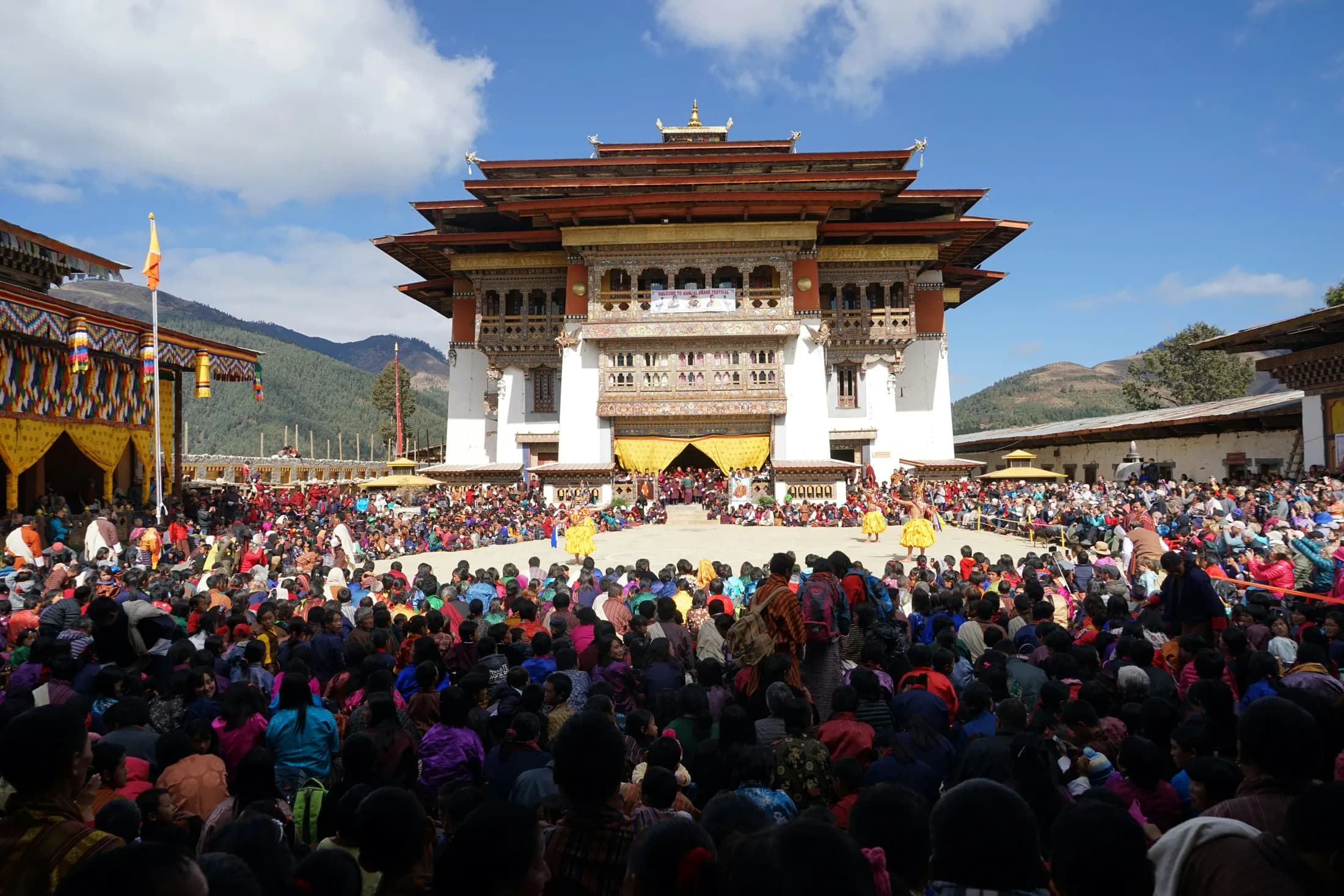
The Black-Necked Crane Festival each November is organised by and for the local community to celebrate the cranes' return, with visitors welcome to watch schoolchildren perform crane-themed dances.
November–February for the Cranes
This is when the black-necked cranes are reliably present in the valley, though the scenery and walking trails are worthwhile at other times of year too.
Nearby & Related Destinations
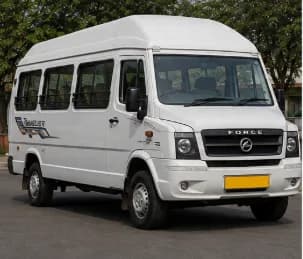
Getting Around by Private Car


Common Questions
Real questions from travellers, about Gangtey specifically.
Can't find your answer? Our team responds within 2 hours on WhatsApp and within 12 hours by email.
When can we see the black-necked cranes?
The cranes typically arrive in the valley from late October and stay through February, with November to February being the most reliable window for sightings.
How far is Gangtey from Thimphu?
About 4 to 5 hours by road via Punakha and the Pele La pass — most itineraries visit Punakha first, then continue on to Gangtey rather than travelling there directly.
Do we need a guide to visit Bhutan?
Yes — most foreign visitors travel with a licensed local guide and pay a daily Sustainable Development Fee, both arranged through a registered tour operator like us as part of your booking.
Is Gangtey worth visiting outside crane season?
Yes — the Phobjikha Valley's scenery and the monastery are worthwhile year-round, even without the cranes or the November festival taking place.
The cranes typically arrive in the valley from late October and stay through February, with November to February being the most reliable window for sightings.
About 4 to 5 hours by road via Punakha and the Pele La pass — most itineraries visit Punakha first, then continue on to Gangtey rather than travelling there directly.
Yes — most foreign visitors travel with a licensed local guide and pay a daily Sustainable Development Fee, both arranged through a registered tour operator like us as part of your booking.
Yes — the Phobjikha Valley's scenery and the monastery are worthwhile year-round, even without the cranes or the November festival taking place.
Itinerary planned by Dhruv Poonia, Digital & Marketing Manager
Start Your Journey
Your Journey to Gangtey Awaits.
When Will You Go?
Tell us how many days you have and what you'd like to see — we'll reply with a tailored itinerary and quote, usually within 24 hours.