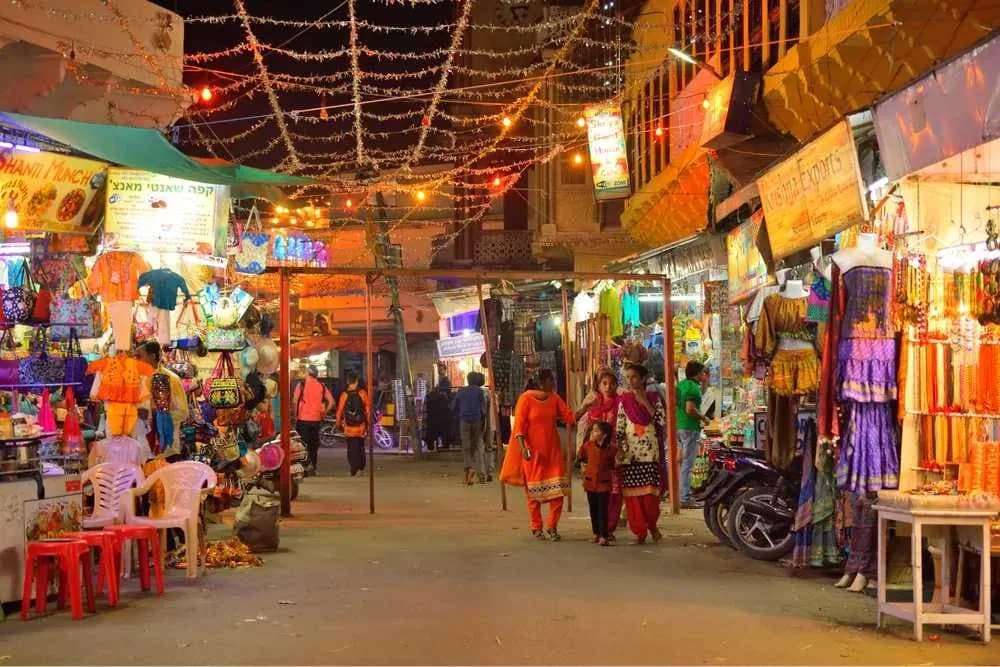
Currency & Payments Guide for India
Cash, cards, ATMs and the rise of UPI — how money actually moves on an India trip, and what to expect at the till.
By Dhruv Poonia, Digital & Marketing Manager, Colourful Indian Holidays · Published 25 September 2026
Already know you want this trip? Skip ahead and tell us your dates.
India's currency is the Indian Rupee (₹, INR), and how you handle money here has shifted noticeably in recent years — the country has one of the world's most advanced digital payment systems for locals, even while cash remains genuinely essential for a large share of everyday transactions. For an international traveller, the practical reality sits in between: cards cover more than they used to, cash still matters more than in many Western countries, and a newer digital option (UPI) is edging open to tourists but isn't something to plan a trip around just yet. This guide covers what actually works, in practice, for a visitor — not the theoretical picture you'd get from a generic list of payment methods, but how money genuinely changes hands on a real trip, route by route and city by city.
Where Should You Exchange Currency for the Best Rate?
You'll generally get a better exchange rate at a bank or an RBI-authorised money changer inside India than at your home country's airport before you leave, and noticeably better than the currency counters in the arrivals hall of Indian airports, which are convenient but consistently offer among the least favourable rates available. A reasonable approach: exchange a small amount before or immediately on arrival for your first day's incidental expenses, then use an authorised money changer or bank in the city for anything larger once you've had a chance to compare rates rather than exchanging everything in one rushed transaction at the airport.
When comparing rates, look at the actual amount of rupees you'll receive rather than just the advertised exchange rate, since some money changers advertise an attractive headline rate while adding a separate commission or service fee that isn't obvious until you're at the counter. Reputable banks and well-known authorised dealers rarely do this, which is one more reason to favour them over an unfamiliar exchange counter simply because it's convenient.
Bringing Cash Into India: Declaration Rules
There's no upper limit on how much foreign currency you can bring into India, but two thresholds trigger a mandatory customs declaration: foreign currency notes exceeding USD 5,000, or total foreign exchange (cash plus traveller's cheques, drafts and similar instruments) exceeding USD 10,000. Below those figures, no declaration is required and you can simply walk through the green channel. Above them, declare via the Currency Declaration Form or, increasingly, the ATITHI app — a government e-customs declaration app that's become the standard route at major airports, letting you file your declaration before landing and present a QR code at customs rather than filling out a paper form on arrival. Indian currency carriage works differently: residents may carry up to ₹25,000 in or out of the country without declaration, while non-residents, including most tourists, generally aren't permitted to carry Indian rupee notes across the border at all, which is one more reason it's not worth trying to source rupees before you land.
For the vast majority of tourists on a standard holiday, none of this ends up mattering in practice — carrying a few hundred dollars in cash alongside a card is well under either threshold. It becomes genuinely relevant mainly for longer stays, business travel involving larger cash needs, or specific situations like carrying cash for a family wedding or property matter, which is a different category of travel to the leisure itineraries this guide is mostly written for. Whichever category you fall into, keeping the declaration receipt (paper CDF or ATITHI confirmation) is worth doing if you plan to convert a large sum to rupees at a bank later in your trip, since authorised dealers may ask to see it for amounts above their own internal threshold.
ATMs & Card Payments
ATMs are widely available in every city and most towns on a typical itinerary, and international Visa and Mastercard-network debit cards generally work at them, subject to your own bank's international withdrawal settings — it's worth confirming these are switched on before you travel, since a card blocked for suspected fraud on your first withdrawal is a genuinely common and avoidable travel hiccup. Expect a withdrawal fee from the Indian ATM operator, often on top of whatever your home bank charges for international withdrawals, so larger, less frequent withdrawals are usually more cost-effective than several small ones.
A practical tip worth knowing: ATMs run by major Indian banks (SBI, HDFC, ICICI, Axis among the largest) tend to be more reliable for international cards than smaller regional or white-label ATM networks, which occasionally reject foreign cards outright or impose lower per-transaction limits. If one ATM declines your card, it's often simply that machine or network rather than a problem with your card itself — trying a different bank's ATM nearby resolves this more often than not.
Card acceptance for purchases has grown substantially — hotels, restaurants, larger shops and malls generally accept Visa and Mastercard without issue. Markets, small local restaurants, auto-rickshaw drivers and roadside vendors are a different story, where cash is still the norm and sometimes the only option. If you pay your tour balance with us by card, a 2% bank or gateway charge applies, disclosed upfront in your quote rather than added as a surprise later — worth knowing as a general pattern, since many merchants and card machines in India apply a similar surcharge on card payments.
UPI: India's Dominant Payment System (and Where Tourists Stand)
UPI (Unified Payments Interface) is how the vast majority of everyday transactions happen in India today — scan a QR code with a banking app, confirm the amount, and the payment clears instantly, whether it's a market stall or a five-figure rent payment. For years this was genuinely off-limits to foreign visitors without an Indian bank account, but that's been changing incrementally. A prepaid wallet called UPI One World began a pilot rollout in early 2026, allowing visitors from a defined list of countries to load funds and pay via UPI QR codes without an Indian bank account or SIM card — though as of writing, this has been rolled out in stages tied to specific events and airports rather than opened generally to all tourists.
The practical takeaway: don't plan your trip's payment strategy around UPI access, since it isn't a reliable, universally available option for visitors yet. Cards and cash remain the dependable combination. That said, it's worth asking your hotel or checking on arrival whether tourist UPI access has expanded further by the time you travel — this is genuinely moving quickly, and what wasn't available six months ago may be by the time you read this.
You'll also see other digital wallets and apps in everyday use — Paytm and PhonePe among the most common — largely built on the same UPI infrastructure and subject to the same access limitations for foreign visitors today. None of these currently offer a meaningfully easier path for tourists than UPI itself, so the practical advice remains the same regardless of which app or brand you might read about: treat digital wallets as a possible bonus rather than a primary plan.
What Do Things Typically Cost in India?
India remains inexpensive by Western standards for day-to-day spending, though "how much things cost" varies enormously between a street-food meal and a five-star hotel restaurant, or between a local bus and a private car with driver. As a rough sense of scale for personal spending money beyond what's included in a booked itinerary: a simple restaurant meal typically costs a fraction of an equivalent meal at home, bottled water and soft drinks are inexpensive everywhere, and souvenirs and handicrafts range widely depending on quality and where you buy them — a fixed-price government emporium versus a bazaar stall where bargaining is expected are genuinely different experiences and price points for similar-looking items.
Bargaining is a normal, expected part of shopping in markets and with individual vendors, though not in fixed-price shops, malls, or with hotel and restaurant bills. If you're unsure whether a price is negotiable, your guide can usually tell you at a glance, and watching how locals approach the same stall is often the fastest way to calibrate what a fair starting offer looks like.
A useful mental model: treat the first quoted price at a bazaar stall as an opening position rather than the actual price, and a good-natured, unhurried back-and-forth as part of the interaction rather than something to feel awkward about — vendors generally expect it and often enjoy the exchange more than a straight, silent purchase. That said, there's no need to over-optimise a small purchase down to the last rupee; most experienced travellers settle on a price that feels fair to both sides rather than squeezing out every possible discount.
Tipping: A Quick Note
Tipping isn't legally required anywhere in India, but it's a well-established and genuinely appreciated practice in tourism specifically, where guides and drivers often rely on it as a meaningful part of their income. Small notes are the easiest way to handle this, since exact change matters more here than rounding up the way you might elsewhere — another good reason to keep a reasonable stock of smaller-denomination rupees on hand throughout your trip rather than only larger notes.
A Practical Money Strategy for Your Trip
- Carry a primary card (Visa or Mastercard) for hotels, larger restaurants and shops
- Keep a reasonable amount of rupee cash on hand for markets, small vendors, tips, and auto-rickshaws
- Withdraw cash from bank-branded ATMs where possible, in larger amounts less often to reduce per-withdrawal fees
- Confirm your card's international and ATM settings with your bank before you travel
- Keep a small emergency cash reserve in a separate place from your main wallet
- Keep a stock of smaller-denomination notes for tips, small purchases and situations where a vendor can't break a large bill
On our itineraries, hotels, the vehicle and driver, and any pre-arranged activities are already settled as part of your booking, so day-to-day cash on the road mostly covers personal spending — meals outside included options, souvenirs, tips, and small purchases along the way. Your guide can also help point you toward the nearest reliable ATM or money changer wherever you are, rather than leaving you to search on your own.
See how much of the day-to-day spending our packages already cover. View a sample package's inclusions
Bringing It All Together
Money in India is more straightforward for visitors than the details above might suggest — the short version is card for the big things, cash for the small things, and a sensible ATM strategy in between. The declaration rules only matter if you're carrying unusually large amounts of cash, and UPI is worth keeping an eye on as an emerging option rather than building a plan around. If you have a specific question about handling money on your itinerary, it's exactly the kind of practical detail worth asking us directly before you travel.
None of this needs to occupy much of your actual attention once you're on the ground — a card, a reasonable amount of local cash, and a general sense of the rules above is genuinely all most travellers need for a smooth, worry-free trip. The goal of this guide is to remove that low-level uncertainty before you land, not to add a new thing to worry about during a trip that should mostly be about the places you're seeing rather than how you're paying for them.
Dhruv Poonia is the Digital & Marketing Manager for Colourful Indian Holidays, working alongside a family travel business that has arranged tours across India, Nepal and Bhutan since 2007. He also oversees the company's sister sites, Rajasthan Travel Agency and Palace on Wheels Tour.
He writes and maintains the destination guides, route information and travel advice published on this site, drawing on his day-to-day work planning itineraries for international travellers to keep every page accurate and current.
Start Your Journey
Money Sorted? Let's Plan the Trip.
Tell Us Your Dates.
Every itinerary is built privately around your dates and interests — tell us what you have in mind and we'll reply within 24 hours.