Rajasthan's Heritage Trail: Jodhpur, Jaisalmer & Udaipur
A different route through Rajasthan, built around its forts, carved havelis and living craft traditions rather than the standard city circuit.
Duration
8 Days / 7 Nights
Group Size
Private, any size
Starting From
From $700
Best Season
Oct – Mar
*Indicative price in USD. Final quote provided in INR or USD based on your preference. Price varies by travel dates, group size and hotel category.
Rajasthan Culture & Heritage Trail Itinerary
Most Rajasthan itineraries follow the same well-worn path through Jaipur. This one deliberately doesn't, starting instead in Jodhpur's blue-washed old town beneath Mehrangarh Fort, continuing into the desert to Jaisalmer — home to some of the most elaborately carved merchant havelis anywhere in India — and finishing in Udaipur's palace-lined lakes. The focus throughout is heritage in its most tangible form: carved sandstone facades, centuries-old forts still standing largely intact, and craft traditions — block printing, miniature painting, silverwork — that continue in the same family workshops that have practised them for generations.
Day 1 — Arrive in Jodhpur
Private transfer from Jodhpur airport or railway station to your hotel, with the rest of the day free to rest and, if you're up for it, a first evening walk through the blue-washed lanes of the old town below Mehrangarh Fort — the indigo colour originally marked Brahmin households and helped repel insects in the desert heat, and it's still a genuinely striking sight after dark when the fort above is lit up. Jodhpur's old city is genuinely disorienting on a first walk, a maze of narrow lanes that seem to double back on themselves, so many travellers prefer their guide's company for this first evening rather than exploring entirely alone. If you'd rather stay closer to your hotel, ask about a rooftop restaurant with a fort view instead — several of the old city's guesthouses have converted their upper terraces into exactly this, and it's a genuinely pleasant way to see the fort lit up without navigating the lanes in the dark.
Day 2 — Mehrangarh Fort & Jodhpur's Old City
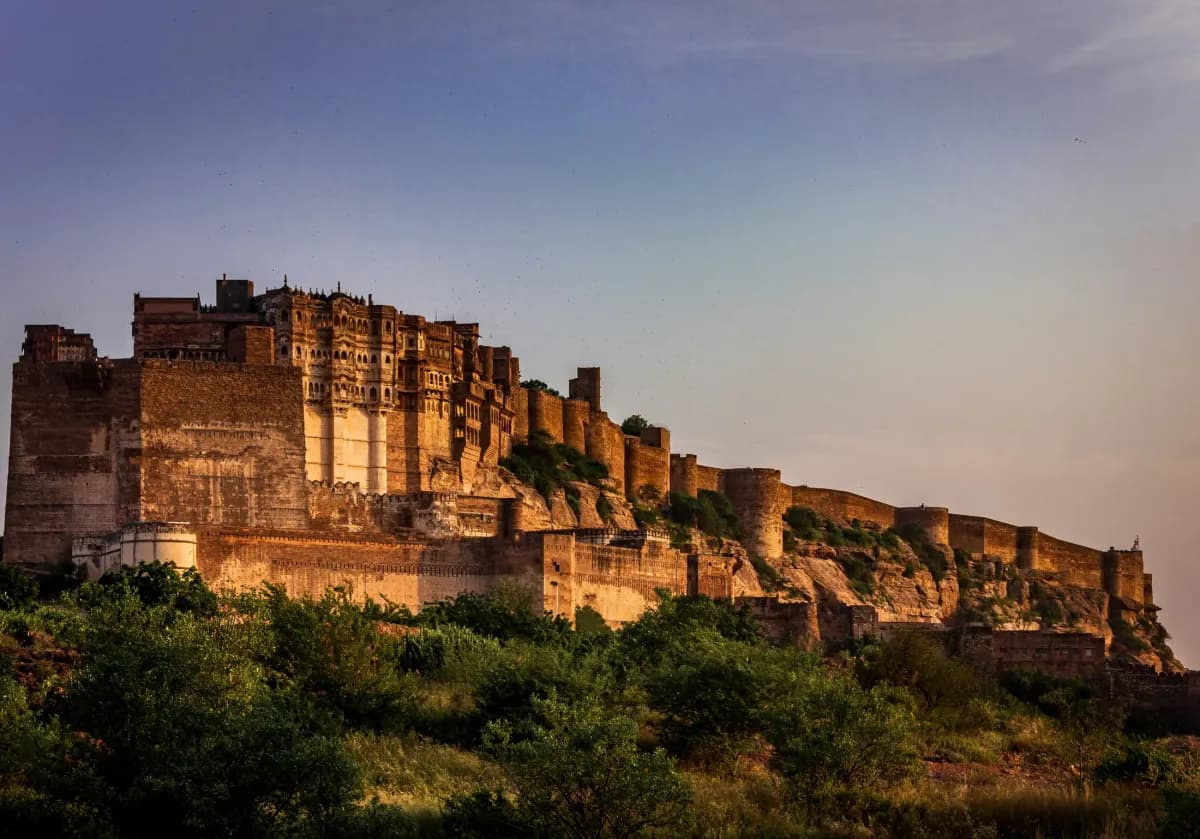
A full day centred on Mehrangarh Fort, one of the largest and best-preserved forts in India, its sandstone ramparts rising nearly 400 feet directly above the Blue City. Inside, the fort's museum holds an exceptional collection of palanquins, weapons and royal costumes, and the ramparts themselves offer some of the most photographed views in all of Rajasthan. The fort was founded in 1459 by Rao Jodha, and unlike many Rajasthan forts that fell into disrepair, Mehrangarh has been continuously maintained and expanded by successive rulers for over 500 years, which is part of why its museum collection is considered one of the finest in the country. In the afternoon, visit Jaswant Thada, a white marble memorial from 1899 whose thin marble sheets glow faintly when sunlight passes through them, before a slower walk through the old city's silver and textile workshops, several of which have operated from the same family premises for multiple generations.
Day 3 — Jodhpur to Jaisalmer
A scenic drive deeper into the Thar Desert to Jaisalmer, roughly 5 to 6 hours, watching the landscape grow progressively drier and more open along the way — Jodhpur's scattered farmland gives way to genuine desert scrubland within the first couple of hours, and by the time Jaisalmer's outline appears on the horizon, the terrain either side of the highway is unmistakably Thar Desert rather than the more fertile country around Jodhpur. The drive itself passes through small desert villages where camel carts still share the road with trucks, a genuinely different rhythm of life from the cities either end of the journey. Arrive by evening with time to settle in before tomorrow's exploration of the Golden City itself, so named for the honey-coloured sandstone its entire old town — fort included — is built from, glowing a deep gold in the late afternoon sun in a way that photographs consistently undersell.
Day 4 — Jaisalmer Fort & the Merchant Havelis
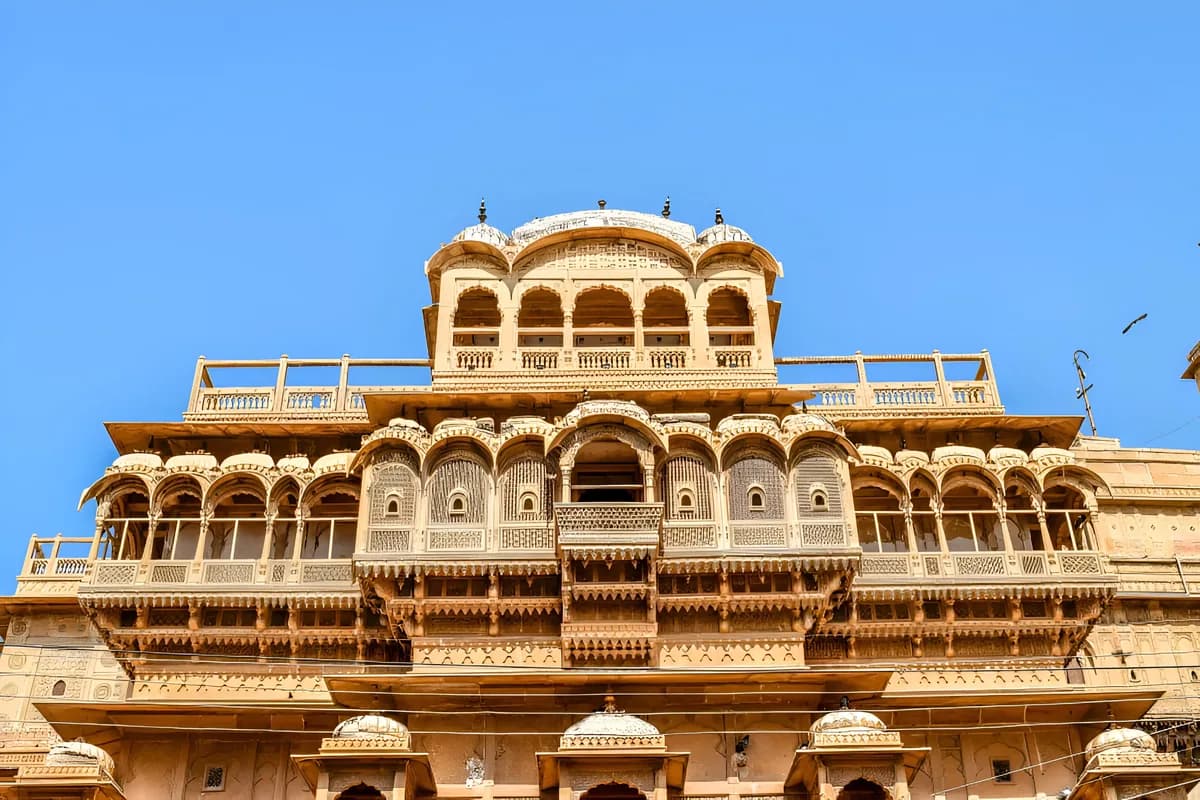
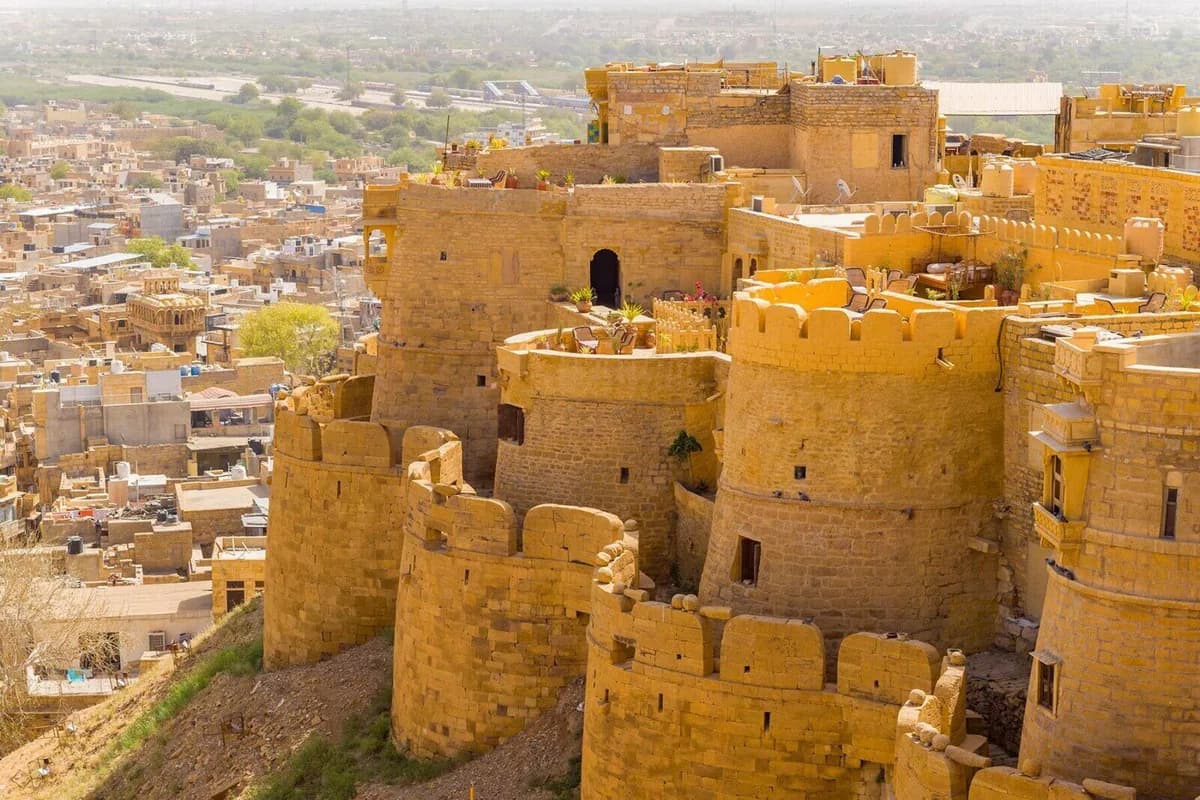
A full day inside Jaisalmer Fort, one of the very few 'living forts' in the world where thousands of people still reside within its walls, alongside temples, shops and havelis all built from the same golden sandstone. Built in 1156, the fort's continued habitation is genuinely unusual internationally, and comes with real preservation challenges — modern plumbing and increased tourist footfall have put stress on foundations never designed for either, a tension your guide can explain in more depth if you're interested in the conservation debate. In the afternoon, visit Patwon Ki Haveli, a cluster of five ornately carved mansions built by a wealthy merchant family in the 19th century — the sandstone latticework and carved balconies here represent some of the finest decorative stonework anywhere in Rajasthan, a genuine highlight for anyone interested in traditional craftsmanship, with individual sections of the haveli complex having taken decades each to complete by hand.
Day 5 — Jaisalmer's Desert & Gadisar Lake
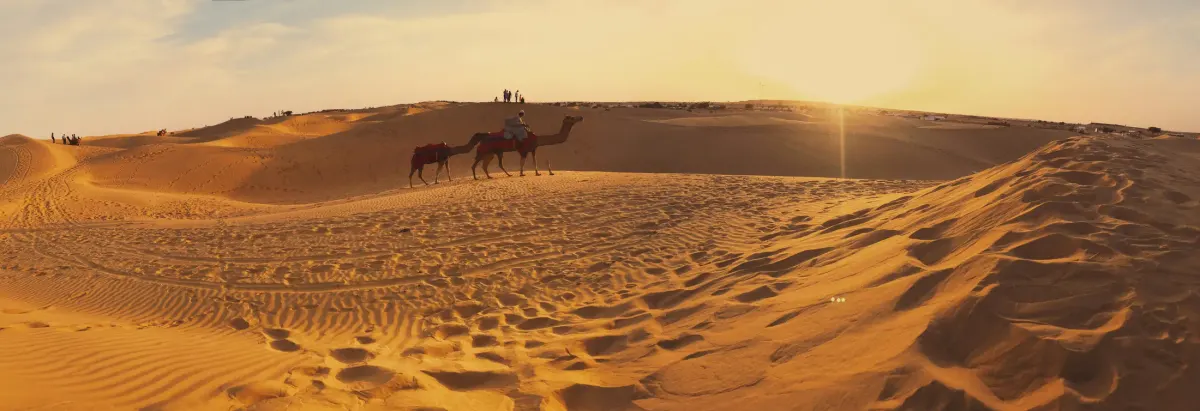
A quieter day taking in Jaisalmer's other side: Gadisar Lake, a man-made reservoir ringed with small temples and shrines, particularly beautiful at sunrise or sunset, and originally built as the town's primary water source in a region where water has always been genuinely scarce — several of the ghats and chhatris around its edge were added by wealthy merchants centuries after the lake itself was constructed, as acts of civic patronage. An afternoon excursion into the surrounding Thar Desert follows, for those who'd like a short camel ride or simply to see the dunes before continuing the journey east tomorrow. The desert here has a genuinely different character depending on the hour — flat and pale under the midday sun, but developing real texture and shadow as the light lowers toward evening, which is why most desert excursions are deliberately timed for the late afternoon rather than earlier in the day.
Day 6 — Jaisalmer to Udaipur
A long drive across Rajasthan to Udaipur, best broken into two shorter days via Jodhpur if your schedule allows, or completed via a domestic flight connection to save time — ask your guide about the flight option when planning your exact route, since the direct road distance genuinely makes for a demanding single day if driven straight through. The landscape shifts substantially over the course of this journey, moving from the Thar Desert's open scrubland back through fertile agricultural country as you approach the Aravalli hills that ring Udaipur, a genuinely different geography from anywhere else on this trail. Arriving in Udaipur, widely considered Rajasthan's most romantic city, in the evening leaves time for a first walk along Lake Pichola as the palace lights begin to reflect on the water — a striking, immediate contrast to Jaisalmer's dry desert stone from just a day or two earlier.
Day 7 — Udaipur Sightseeing
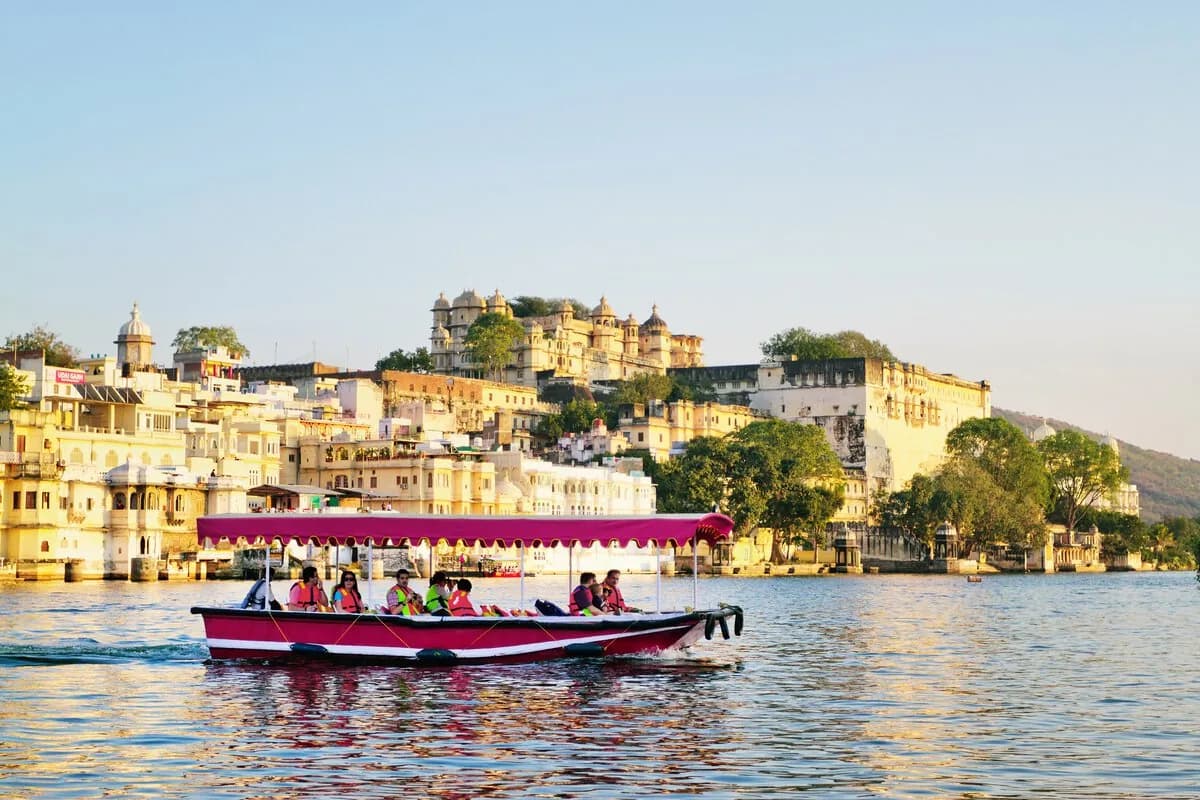
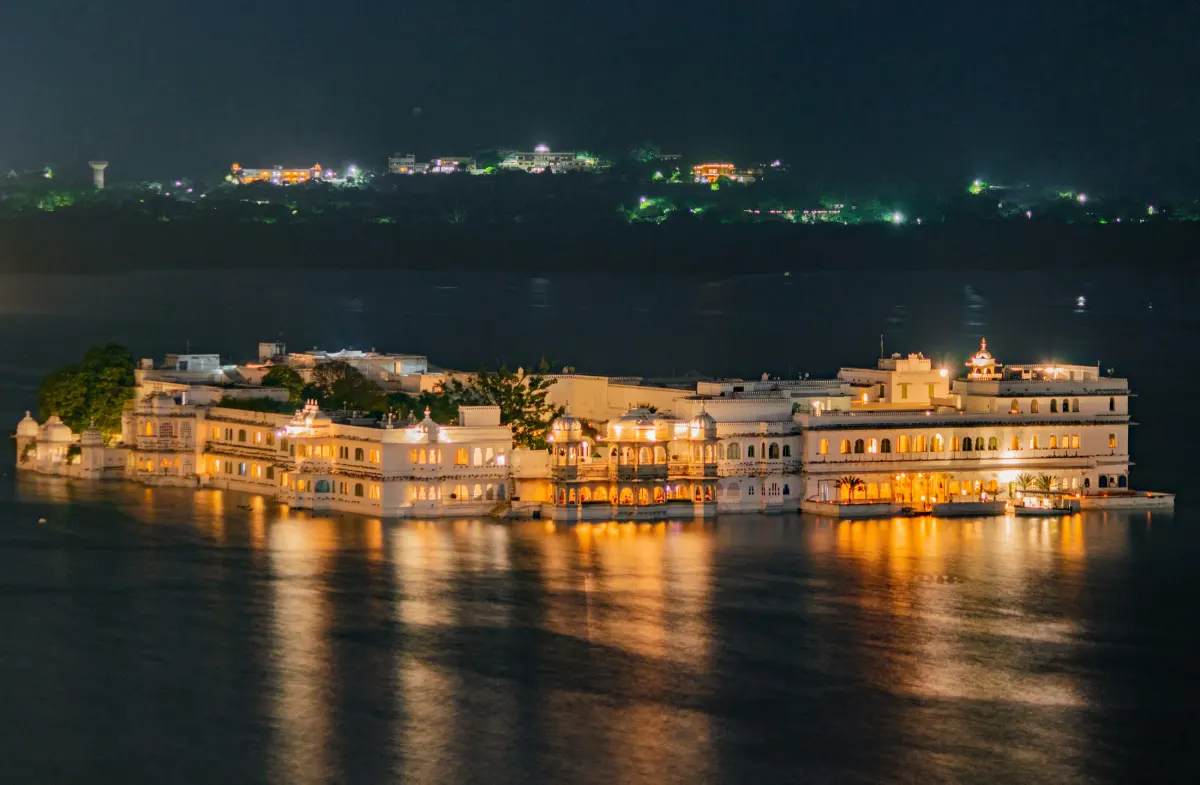
A full day in Udaipur, built around the sprawling City Palace complex, constructed over nearly 400 years by successive maharajas and overlooking Lake Pichola from a series of courtyards, balconies and mirrored halls. Unlike many Rajasthan palaces that were built in a single sustained project, the City Palace grew incrementally as each successive ruler added new wings and courtyards, which is part of why walking through it feels less like touring a single building and more like moving through several centuries of changing architectural taste in one visit. From there, visit the ornately carved Jagdish Temple, still an active place of worship a short walk from the palace, before an evening boat ride on Lake Pichola past the floating Lake Palace, one of the most photographed buildings in India and now operated as a luxury hotel, though it began life as a royal summer retreat built specifically to escape the heat of the main City Palace.
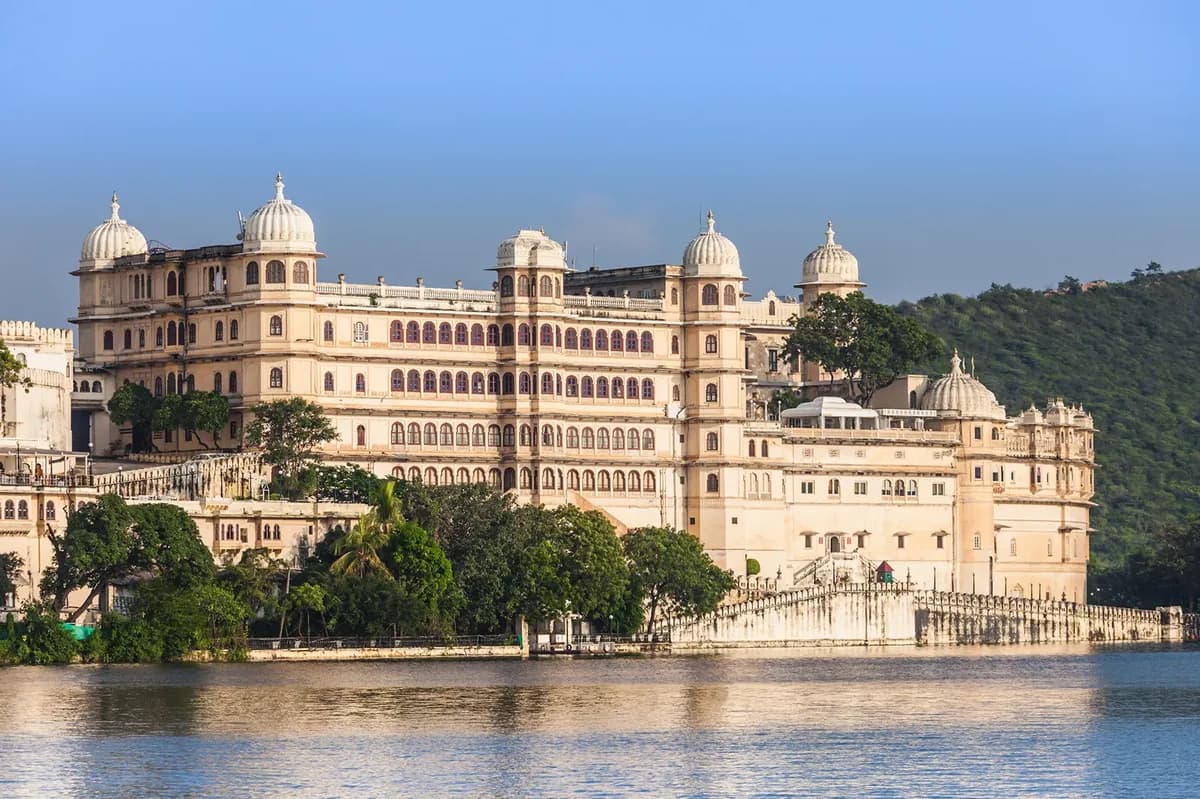
Day 8 — Departure
A private transfer to Udaipur airport for your onward or international departure flight, with the tour concluding after breakfast. If your flight isn't until later in the day, your guide can suggest a final walk along Lake Pichola or a last coffee at a rooftop café overlooking the water, a quieter way to close out the trip than rushing straight to the airport. Looking back over eight days, the trail moves from Jodhpur's fortified heights through Jaisalmer's carved desert architecture to Udaipur's lakeside palaces — three genuinely different expressions of Rajasthani heritage, rather than one city blending into the next, and a route that consistently surprises travellers who assumed Rajasthan's forts would start to feel repetitive after the second or third one.
Inclusions & Exclusions
What's Included
- 7 nights in hotels of your choice, twin-sharing
- Daily breakfast
- Private air-conditioned vehicle for all transfers and sightseeing
- English-speaking guide throughout
- Monument entry fees as per itinerary
- All applicable hotel and transport taxes
Not Included
- Domestic flights, if chosen over the Jaisalmer–Udaipur road route
- Lunches and dinners (unless noted)
- Personal expenses, tips, and travel insurance
- Camel ride in the desert (arranged on request, paid locally)
- Camera fees at monuments (paid locally)
Why Travel Rajasthan Culture & Heritage Trail With Us
A Genuinely Different Route
Skips Jaipur and Pushkar entirely in favour of Jodhpur, Jaisalmer and Udaipur — a real alternative for travellers who've done the standard circuit before.
Jaisalmer's Carved Havelis
Patwon Ki Haveli's sandstone latticework represents some of the finest traditional stonework anywhere in Rajasthan, genuinely rare to see up close.
A Living Fort, Not Just a Monument
Jaisalmer Fort is one of the few forts in the world still inhabited by thousands of residents, giving it a lived-in character most forts lack.
October–March is Best
Cool, dry conditions make both Jodhpur and Jaisalmer's desert heat manageable for sightseeing. April to June turns genuinely punishing in Jaisalmer specifically, and the July–September monsoon brings occasional rain and higher humidity.
Related Destinations
Related Tour Packages
Getting Around by Private Car



Helpful Travel Guides
- Monuments in Rajasthan: A Complete GuideAmber, Mehrangarh, Jaisalmer Fort and the palaces worth your time.Read the guide
- Places to Visit in ShekhawatiRajasthan's painted haveli towns, off the usual circuit.Read the guide
- Rajasthan Itinerary: How to Plan 7, 10 and 12 DaysWhich cities to include at each length, with realistic pacing.Read the guide
Common Questions About the Rajasthan Culture & Heritage Trail
Can't find your answer? Our team responds within 2 hours on WhatsApp and within 12 hours by email.
How is this different from the classic Rajasthan Tours circuit?
The classic circuit covers Jaipur, Jodhpur, Udaipur and Pushkar. This trail skips Jaipur and Pushkar entirely and adds Jaisalmer instead, specifically for travellers who want a heritage-and-craft focus rather than a broader city-by-city overview.
Should we fly or drive between Jaisalmer and Udaipur?
Driving takes a full day and shows genuinely dramatic desert-to-lake scenery; flying (via a connection) saves time if your schedule is tighter. We can price both options when planning your exact itinerary.
Is Jaisalmer Fort still an active town, not just a tourist site?
Yes — it's one of the few forts in the world where thousands of people still live within the walls, alongside shops, temples and havelis, giving it a genuinely different atmosphere from a purely historical monument.
Can we add Jaipur back into this itinerary if we want both routes?
Yes — this trail can be extended or combined with a Jaipur stop at either end. Let us know your available days and we'll adjust the route accordingly.
Are Patwon Ki Haveli's carvings genuinely different from what we'll see elsewhere in Rajasthan?
Yes — the sandstone latticework and carved balconies here are considered some of the finest decorative stonework in the state, distinct from the fort architecture of Jodhpur or the marble palaces of Udaipur.
The classic circuit covers Jaipur, Jodhpur, Udaipur and Pushkar. This trail skips Jaipur and Pushkar entirely and adds Jaisalmer instead, specifically for travellers who want a heritage-and-craft focus rather than a broader city-by-city overview.
Driving takes a full day and shows genuinely dramatic desert-to-lake scenery; flying (via a connection) saves time if your schedule is tighter. We can price both options when planning your exact itinerary.
Yes — it's one of the few forts in the world where thousands of people still live within the walls, alongside shops, temples and havelis, giving it a genuinely different atmosphere from a purely historical monument.
Yes — this trail can be extended or combined with a Jaipur stop at either end. Let us know your available days and we'll adjust the route accordingly.
Yes — the sandstone latticework and carved balconies here are considered some of the finest decorative stonework in the state, distinct from the fort architecture of Jodhpur or the marble palaces of Udaipur.
Itinerary planned by Dhruv Poonia, Digital & Marketing Manager
Start Your Journey
Your India, Nepal & Bhutan Journey Awaits.
Where Will You Begin?
Every itinerary is built privately around your dates and interests — tell us what you have in mind and we'll reply within 24 hours.