Delhi – Agra – Jaipur – Ranthambore: The Golden Triangle, With a Tiger Safari
The classic Golden Triangle plus two full days at Ranthambore National Park — a real chance at spotting a wild tiger, without adding a separate trip.
Duration
8 Days / 7 Nights
Group Size
Private, any size
Starting From
Price on Request
Best Season
Oct – Apr
Delhi – Agra – Jaipur – Ranthambore Itinerary
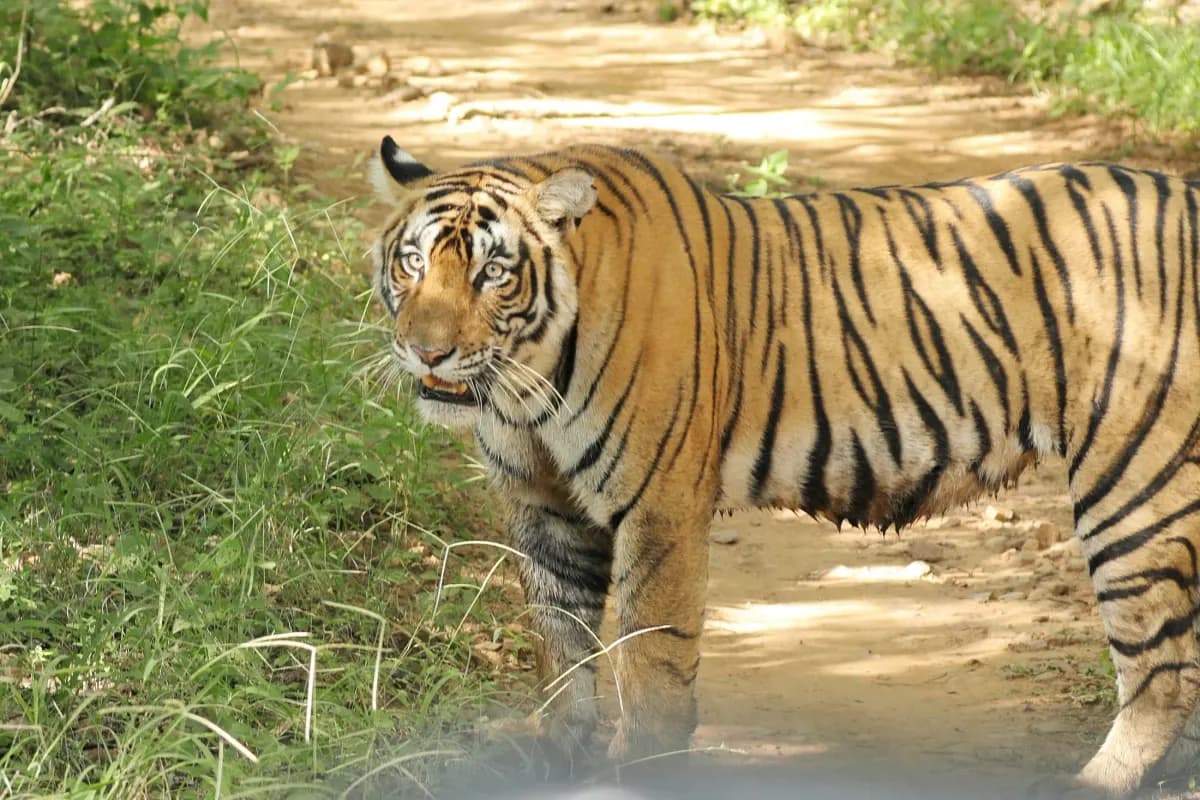
This 8-day itinerary adds Ranthambore National Park to the classic Golden Triangle, inserted between Agra and Jaipur along a route many travellers don't realise passes so close to one of India's best tiger reserves. It suits travellers who want more than monuments and forts on their first trip to India — a genuine chance at spotting a wild Bengal tiger, alongside sloth bears, leopards and marsh crocodiles, in a park built around the dramatic ruins of a 10th-century fort. Two full days at the park allow for four safari drives across morning and afternoon slots, giving a realistic chance of a sighting rather than a single rushed drive.
Day 1 — Arrive in Delhi
On arrival at Indira Gandhi International Airport, your private guide and driver meet you at the terminal for a hassle-free transfer to your hotel — no navigating pre-paid taxi queues, currency counters or SIM card kiosks alone after a long international flight. This first-day pickup is one of the details international travellers appreciate most, since jet lag and an unfamiliar city are a lot to absorb at once. The rest of the day is left free to rest, shower off the flight and adjust to the time change, with an optional evening orientation walk through a nearby market if you'd rather ease gently into the sounds and street food of the Indian capital than stay in the hotel. Your guide can suggest a nearby restaurant for dinner suited to your taste, whether that's an introduction to North Indian cuisine or something more familiar while you settle in before sightseeing begins in earnest tomorrow.
Day 2 — Delhi Sightseeing
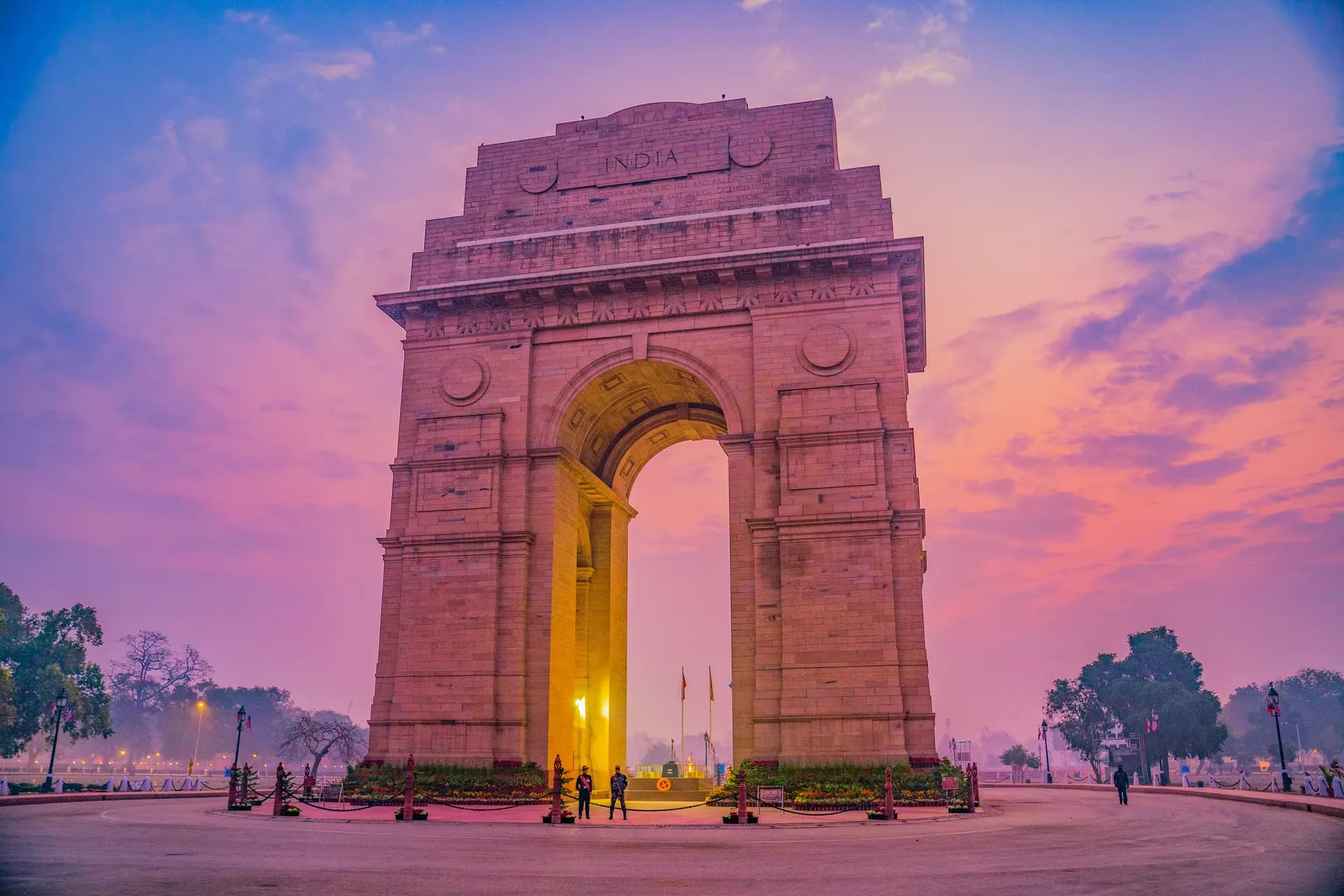
A full-day private tour designed to cover Delhi's Mughal and colonial layers in one comfortable day rather than rushing between them. In Old Delhi: Humayun's Tomb, the elegant red-sandstone precursor to the Taj Mahal and a UNESCO World Heritage Site in its own right, the Jama Masjid mosque with its sweeping courtyard, and a cycle-rickshaw ride through the densely packed spice and textile lanes of Chandni Chowk, one of the oldest and busiest markets in India. In New Delhi: the wide colonial-era avenues around India Gate, the government quarter surrounding Rashtrapati Bhavan, and the towering Qutub Minar if time and light allow. Your English-speaking guide narrates the history as you go, pointing out details on plaques and monuments you'd otherwise walk straight past, and helps translate the sensory overload of Old Delhi's markets into something easier to navigate and enjoy rather than overwhelming.
Day 3 — Delhi to Agra
A scenic 3 to 4 hour private drive south along the Yamuna Expressway to Agra, home of the Taj Mahal and one of the most anticipated stops on any first trip to India. Your air-conditioned vehicle makes the journey comfortable, with a rest stop along the way if needed. After checking into your hotel, visit Agra Fort — a red sandstone UNESCO World Heritage Site and the Mughal seat of power before the capital later moved to Delhi — walking the same ramparts where Emperor Shah Jahan was reportedly imprisoned by his own son, with a distant view of the Taj Mahal he built for his wife visible from the fort walls. In the evening, head to the Mehtab Bagh gardens across the river for a first, wonderfully uncrowded view of the Taj Mahal at sunset, framed by the garden's symmetrical layout exactly as the Mughals intended it to be seen.
Day 4 — Taj Mahal Sunrise, on to Ranthambore
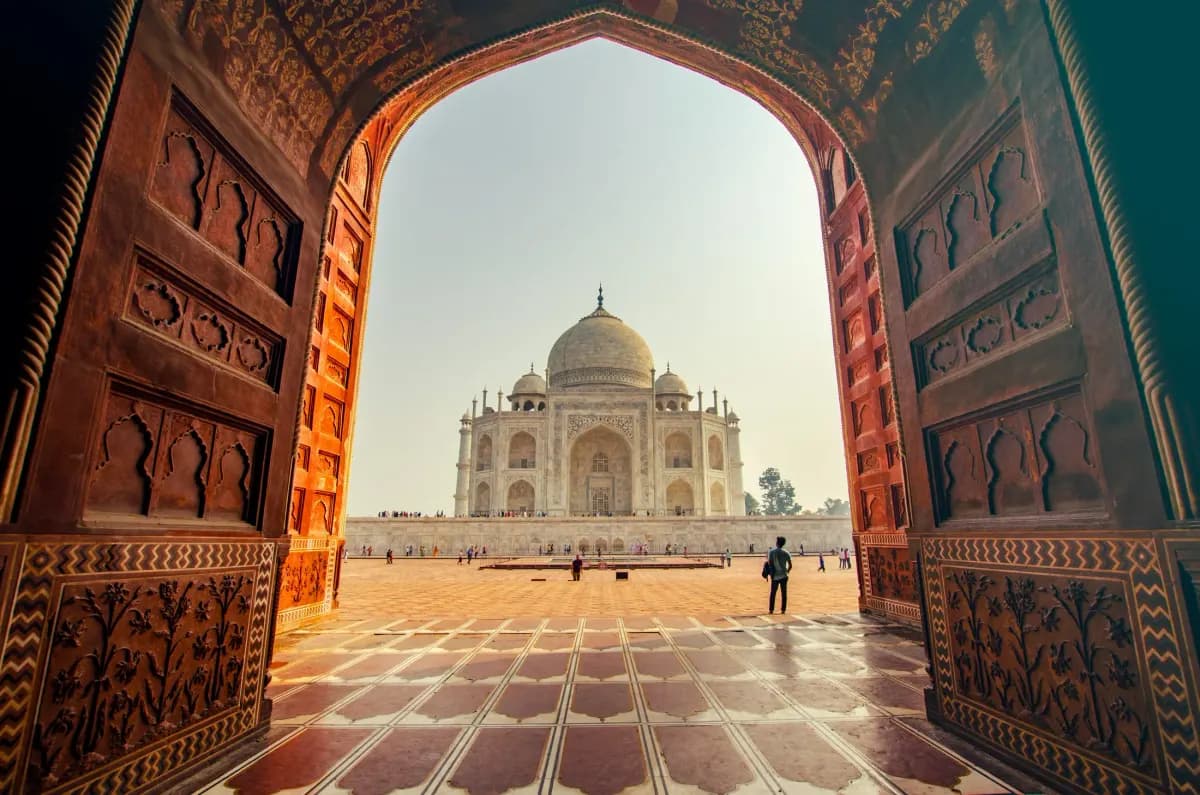
Enter the Taj Mahal at opening hour for sunrise — the single most-recommended timing among experienced India travel guides, for softer photography light, cooler temperatures, and by far the thinnest crowds of the day. Your guide will point out details easy to miss on your own: the semi-precious stone inlay work known as pietra dura, the calligraphy that appears uniform in size despite scaling with height as it rises up the archways, and the deliberate symmetry designed to be viewed from the main gateway. Afterwards, check out and begin the roughly 4 to 5 hour drive south to Ranthambore, a noticeably different landscape of dry deciduous forest and rocky hills replacing the flat plains around Agra. Arrive at your safari lodge in the late afternoon with time to settle in, review the safari zones with your naturalist guide, and rest before an early start tomorrow.
Day 5 — Full Day of Tiger Safaris
Two safari drives today, at dawn and again in the late afternoon — the two windows when tigers and other wildlife are most active and temperatures are most comfortable for both animals and visitors. Ranthambore National Park is divided into numbered safari zones, and your naturalist guide and driver work the radio network with other vehicles to maximise your chances of a sighting. Beyond tigers, the park holds sloth bears, leopards, marsh crocodiles sunning themselves on the lake edges, and well over 300 recorded bird species. What makes Ranthambore visually distinctive among India's tiger reserves is its 10th-century ruined fort, its walls and chhatris overgrown with banyan roots, standing directly within the park boundary — tigers are regularly photographed walking past its ancient gateways and lake-front pavilions, a backdrop no other Indian safari destination quite matches.
Day 6 — Morning Safari, Drive to Jaipur
One further safari drive at dawn, ideally in a different numbered zone from the previous day's drives to maximise your chances of a fresh sighting or simply to see more of the park's varied terrain — open grassland, dense forest, and the lakes around the old fort each attract different wildlife. After breakfast back at the lodge, begin the roughly 4-hour drive to Jaipur, watching the landscape shift again from Ranthambore's forested hills to the drier, more open country approaching Rajasthan's capital. Arriving in the early-to-mid afternoon leaves time to check into your hotel, rest after two early safari mornings in a row, and perhaps take a short walk near your hotel before dinner, with the full sightseeing day in Jaipur still ahead of you tomorrow.
Day 7 — Jaipur Sightseeing
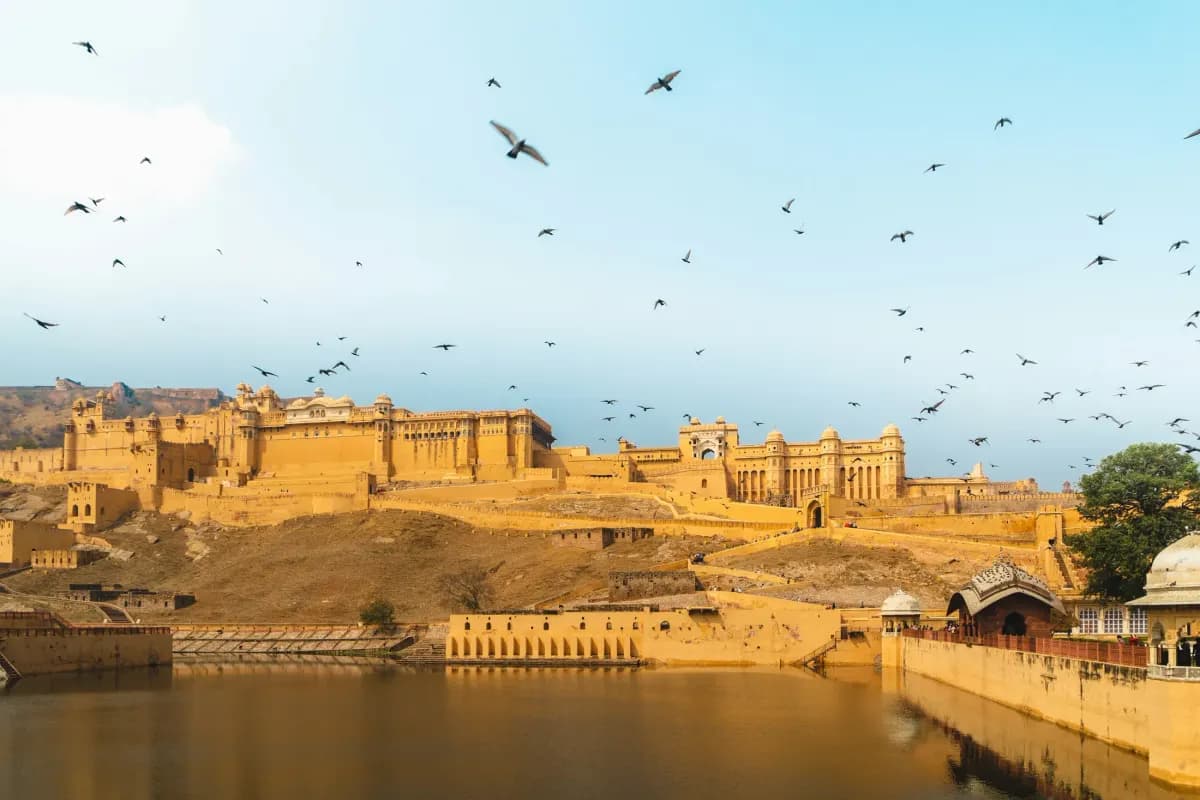
A full day exploring the Pink City, so named for the terracotta-pink wash applied to its old city buildings in 1876 to welcome a visiting British prince. Start early at Amber Fort, with the option of a jeep ride up to the entrance, followed by the City Palace complex — still partly home to Jaipur's former royal family — the Jantar Mantar astronomical observatory with its giant stone instruments accurate to within seconds, and a photo stop at the honeycomb pink façade of Hawa Mahal, the Palace of Winds. The evening is left free for Jaipur's famous bazaars: Johari Bazaar for gemstones and jewellery, Bapu Bazaar for textiles and hand block-printed fabric — both popular with international travellers looking to bring home something authentically Rajasthani after a trip built as much around wildlife as heritage.
Day 8 — Departure
A private transfer to Jaipur airport, or back to Delhi for your international departure flight, with the tour concluding after breakfast. If your schedule allows a little extra time before departure, your guide can suggest a last-minute stop — a final bazaar visit, a coffee at a heritage café, or simply a slower morning to look back over your safari photos and reflect on the trip. Many travellers who've added Ranthambore to their itinerary find the safari days are what they talk about most afterwards, tigers or not, simply for how different the pace and scenery felt compared to the monuments and forts on either side of it. If you have more time on a future trip, Ranthambore also pairs well with Bandhavgarh or Kanha for a longer, dedicated wildlife circuit across central India.
Inclusions & Exclusions
What's Included
- 7 nights in hotels of your choice, twin-sharing
- Daily breakfast
- 4 jeep or canter safari drives at Ranthambore National Park
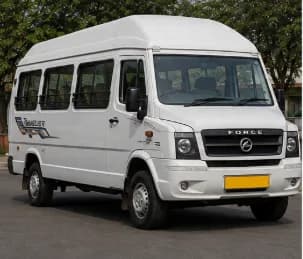
- Private air-conditioned vehicle for all transfers and sightseeing
- English-speaking guide throughout
- Monument and park entry fees as per itinerary
- All applicable hotel and transport taxes
Not Included
- International and domestic flights — booked only on request
- Visa fees
- Lunches and dinners (unless noted)
- Personal expenses, tips, and travel insurance
- Camera fees at monuments (paid locally)
Why Travel Delhi – Agra – Jaipur – Ranthambore With Us
A Real Chance at a Wild Tiger Sighting
Four safari drives across two full days give meaningfully better odds than the single rushed safari some shorter itineraries squeeze in.
A Fort Inside the Jungle
Ranthambore Fort, still standing within the park itself, gives the safari a genuinely different visual backdrop from India's other tiger reserves.
Monuments and Wildlife, Not Just One or the Other
Most first-time itineraries pick either heritage sites or a safari — this route gives a serious dose of both without adding a separate trip.
October–April is Best
This window covers both the comfortable sightseeing season in Delhi, Agra and Jaipur, and Ranthambore National Park's open season — the park closes for the monsoon from roughly July to September, so an itinerary built around a tiger safari needs to fall outside those months.
Related Destinations
Related Tour Packages
Getting Around by Private Car


Common Questions About the Delhi – Agra – Jaipur – Ranthambore
Can't find your answer? Our team responds within 2 hours on WhatsApp and within 12 hours by email.
Ranthambore has one of the higher sighting rates among India's tiger reserves, though nothing in the wild is guaranteed. Two full days with four safari drives gives a meaningfully better chance than a single drive.
If wildlife isn't a priority, the classic 6-day Golden Triangle or the Udaipur extension may suit you better — this route is specifically built around the Ranthambore safaris.
Neutral-coloured clothing, a warm layer for early morning drives (Ranthambore mornings can be cold October–February), sunscreen, and binoculars if you have them.
We quote every trip individually rather than publish a fixed price — the final cost depends on your travel dates, group size, and the hotel category you choose. Send us your dates and hotel preference and we'll reply with an exact quote, usually within 24 hours.
Start Your Journey
Your India, Nepal & Bhutan Journey Awaits.
Where Will You Begin?
Every itinerary is built privately around your dates and interests — tell us what you have in mind and we'll reply within 24 hours.